
AI news ·
AI in the Classroom: How Professors and Students Are Adapting to a New Era of Writing
Universities adapt to AI tools by teaching students to critically edit AI drafts and use them as learning examples. Despite concerns, AI-related cheating cases remain low.
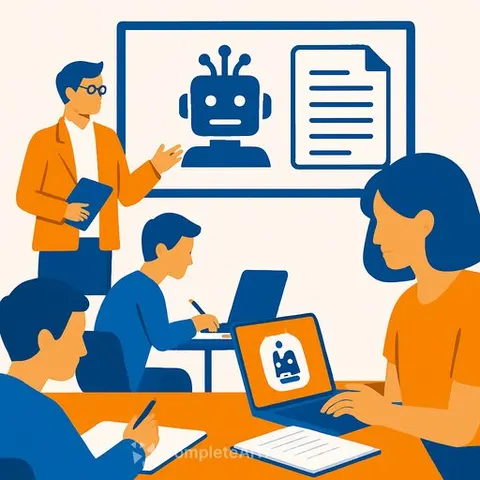
Embracing AI in Education: A Shift in Teaching and Learning
At the University at Albany and nearby colleges, educators are adjusting their approach to student writing in response to AI tools like ChatGPT. Instead of banning AI-generated essays, some professors now teach students how to critically edit these drafts. Others use AI outputs as examples to highlight the value of original writing. Despite widespread concerns about AI-fueled cheating, local institutions report very few formal misconduct cases.
Low Incidence of AI-Related Academic Integrity Issues
Russell Sage College reported only one academic integrity charge related to AI misuse last year, down from six the previous year, among more than 2,000 students. The University at Albany has not seen an increase in cheating cases since AI writing tools became widely available. At Siena College, while some professors handle AI misuse informally, the school has noticed a slight rise in formal AI-related cases, though exact figures remain undisclosed.
The Challenge of Detecting AI-Generated Work
Many professors express concern about identifying AI-written essays, especially from students they have little prior contact with. Traditional plagiarism detection software often flags genuine student work as suspicious. Russell Sage’s Dean of Undergraduate Studies, Andrea Rehn, noted that their academic integrity process excludes AI detectors due to their unreliability and the need for solid proof before accusing students.
Instead, technology such as version history in Google Docs and Word comes into play. These tools track document changes, showing typed content and pasted material over time. This data helps verify whether students created their work incrementally rather than copying and pasting AI text wholesale. Students even share tips on social media to prove their innocence when wrongly accused.
Professors Adapting to AI in the Classroom
Many educators are reluctantly accepting AI’s presence, recognizing that outright bans are ineffective. At Russell Sage, about half of professors allow students to use ChatGPT for drafting or revising work, provided the source is cited. Others focus on teaching students how to improve AI-generated essays.
Philosophy professor Jon Mandle at UAlbany redesigned his assignments in fall 2023. Instead of writing essays from scratch, students receive AI-generated drafts that they must edit thoroughly. They add quotes, clarify arguments, and write reflections explaining their revisions. According to Mandle, AI essays often lack depth, precision, and evidence, requiring significant student input to meet academic standards.
Encouraging Originality Through Critical Evaluation
UAlbany communications lecturer Lauren Bryant uses AI examples to foster student awareness of writing quality. She has students analyze journal entries, one secretly written by AI, to judge which is best. Many initially prefer the AI version for its polished style. However, discussions reveal that AI writing often lacks personal detail and specificity.
Bryant’s approach helps students recognize AI’s limitations and understand her expectations: content and ideas matter more than flawless grammar. To discourage cheating, she requires students to include specific class details in their entries, such as group member names and quotes from discussions. Her goal is to encourage students to think critically about AI-generated content and embrace writing as a tool for developing clear ideas.
Moving Forward with AI in Education
As AI tools become part of the educational landscape, teaching strategies are adjusting to balance integrity with innovation. By focusing on editing skills, critical evaluation, and transparent use of AI, educators can guide students to use these tools effectively without compromising learning outcomes.
For educators seeking to enhance their understanding of AI applications in teaching and develop practical skills, resources are available at Complete AI Training.