
AI news ·
AI in Whitehall: Ministers Bet Big on Big Tech Amid Copyright and Accuracy Fears
The UK government launches Humphrey, an AI tool using models from OpenAI, Anthropic, and Google to boost civil service efficiency. Training helps officials use it effectively while addressing accuracy and copyright concerns.
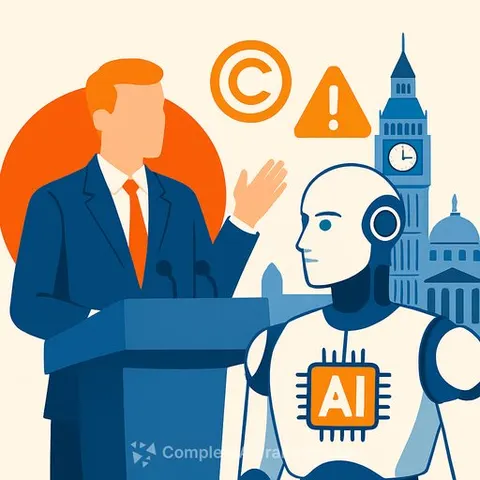
Government Rolls Out AI Tool “Humphrey” to Boost Civil Service Efficiency
Ministers in the UK have made a significant move by integrating artificial intelligence (AI) across the public sector to improve operational efficiency. The government AI toolkit, named Humphrey, uses models from major tech players like OpenAI, Anthropic, and Google. This rollout includes training all civil servants in England and Wales to use the tool effectively.
How Humphrey Works and Its Tech Backbone
Humphrey's AI capabilities are built on established models such as OpenAI’s GPT, Anthropic’s Claude, and Google’s Gemini. Tools like Consult, Lex, and Parlex analyse government consultations and legislative changes, while Redbox assists officials with everyday tasks like briefing preparation.
Interestingly, the government operates without long-term commercial agreements with these tech giants. Instead, it uses a pay-as-you-go approach through existing cloud contracts. This flexibility allows switching between AI tools as technology improves or more competitive options emerge.
Concerns Over Copyright and AI’s Growing Role
Despite the efficiency gains, concerns remain about the government's reliance on AI from big tech companies. One major issue is the ongoing public debate over AI training on copyrighted creative content. The government’s recent data bill allows AI companies to use copyrighted material unless rights holders opt out, a move that faced pushback from artists including Elton John, Paul McCartney, and Kate Bush.
Critics argue that the government’s dual role—both adopting AI tools built from potentially copyrighted material and regulating the tech sector—may lead to conflicts of interest. Ed Newton-Rex, CEO of Fairly Trained, warns that AI frequently makes mistakes, known as “hallucinations,” and suggests that transparent records of Humphrey’s errors should be kept to allow for ongoing review.
Ensuring Accuracy and Addressing Bias
Labour peer Shami Chakrabarti highlights the need for caution, pointing to past issues like the Horizon computer system, which caused miscarriages of justice due to inaccurate data. Whitehall officials acknowledge the risk of AI errors and say they apply different strategies to manage inaccuracies within Humphrey’s tools. They also publish regular evaluations to monitor the accuracy and performance of AI technologies.
Practical Benefits and Cost Efficiency
The government expects AI costs to rise as Humphrey expands, but per-use prices are trending downward industry-wide. For example, AI application in the Scottish government to analyse consultation responses cost under £50 and saved significant staff hours. Similarly, the AI Minute software that takes meeting notes costs less than 50p per hour and reportedly saves an hour of administrative work for officials each time it is used.
Official Response and Future Directions
A spokesperson from the Department for Science, Innovation and Technology emphasized the role of AI in freeing public servants from routine admin tasks, allowing them to focus on their core duties. They stressed that using AI internally does not hinder the government’s ability to regulate the technology externally. The Humphrey toolkit is developed by government AI experts, keeping costs manageable while testing what works best.
Earlier this year, the government announced plans to modify its £23 billion annual technology contracts strategy, aiming to create more opportunities for smaller tech startups, a move that could influence future AI development and deployment.
Training and Resources for Civil Servants
For government employees looking to build AI skills relevant to public sector roles, tailored AI training courses are available. These can help civil servants better understand how to use tools like Humphrey efficiently and responsibly.
Learning how to manage AI tools and understanding their limitations will be essential as these technologies become embedded in government work.