
AI news ·
AI Is the New Auto-Tune: Nvidia’s Richard Kerris Champions Artists’ Freedom to Create with Machines
AI is the new auto-tune, empowering artists to innovate without replacing creativity. Embrace AI tools to enhance your unique style and democratize artistic expression.
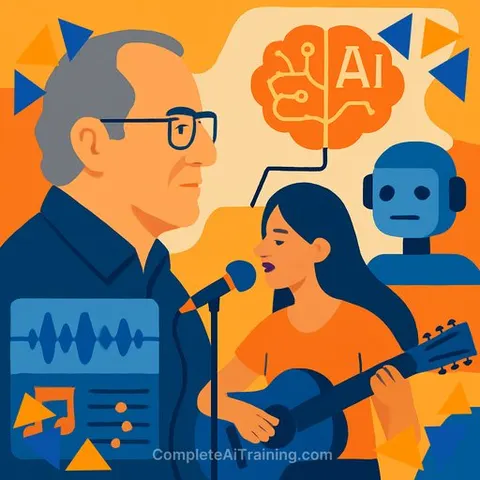
AI Is the New Auto-Tune: Why Artists Should Embrace Machine Collaboration
Nvidia Global VP Richard Kerris has stepped into the growing conversation around AI-generated music, defending the creative freedom of artists to use AI tools. He criticizes streaming platforms that limit musicians from promoting or sharing original pieces created with AI, calling for a more open approach.
Kerris draws a clear parallel between AI and other widely accepted creative technologies. Just as writers rely on spell-check and photographers depend on autofocus, musicians have embraced tools like auto-tune for decades. “When you write scripts, do you use spell-check? Then you've used AI. Did you take a photo using autofocus? It’s only a matter of time before AI-generated music becomes just another part of the creative process,” he explains.
This resistance, Kerris suggests, comes from fear and uncertainty rather than practical concerns. AI, he argues, should be viewed as a tool that artists can use to infuse their unique style into new works, not as a replacement for human creativity.
Empowering Artists with New Tools
AI offers artists a way to extend their creative reach. Kerris emphasizes that creators should be free to harness these tools and share their AI-assisted work globally. “An artist can harness these tools and do things with them in their own flavour,” he says.
While some worry about authenticity, Kerris points out that technology has always evolved alongside art. He references a recent example where a Japanese AI-generated artwork gained massive popularity, driving up GPU demand—proof that AI is more about acceleration and empowerment than replacement.
“AI is a tool that helps you tell a story faster—it doesn’t replace anything. It’s bringing creative power to more individuals worldwide, even on handheld devices,” Kerris adds.
Creativity Is Evolutionary, Not Static
Much like photography once borrowed from painting, and auto-tune reshaped music, AI represents the next step in creativity’s evolution. Kerris encourages artists to push boundaries instead of fearing obsolescence. The essence of creativity—skill, intent, and knowledge—remains foundational, no matter how new the tools.
He also highlights how AI changes the way we interact with technology. Where learning complex software once required heavy manuals, AI now lets users generate content with simple prompts. Still, mastery demands understanding the craft beneath the tools. Owning a camera doesn’t make you a photographer, and using AI doesn’t automatically make you an artist.
Cutting Costs and Democratizing Creativity
Kerris and Nvidia India MD Vishal Dhupar shared insights on how AI will transform media and entertainment, especially within India’s vibrant creative ecosystem. Kerris addressed concerns about AI’s energy consumption, explaining that while AI uses more power than traditional CPUs, it produces results faster, making it more cost-effective overall.
“People say accelerated compute uses more energy and assume it will cost more, but it actually delivers the product faster, so it’s cheaper in the long run,” Kerris explained.
This perspective echoes industry leaders like OpenAI CEO Sam Altman, who notes that AI model costs are dropping steadily, even as investments grow. Improved efficiency will accelerate adoption and spark new opportunities for creators.
For creatives, AI is lowering barriers by enabling high-quality content production on smartphones and affordable devices. Kerris believes these advances will push the cost of intelligence toward the margins, making sophisticated tools accessible to more people.
India’s Role in the AI Era
Dhupar highlighted India's vast developer community as a strong foundation for innovation. “Every eighth line of code written since 1964 was by an Indian,” he said, underscoring the country’s potential to lead in AI development.
As AI continues to reshape the creative landscape, this democratization of tools means more artists can experiment, innovate, and share their unique voices without traditional barriers.
Final Thoughts for Creatives
- AI is a tool—like auto-tune or spell-check—that enhances, not replaces, creative expression.
- Artists should embrace AI to explore new styles and workflows while keeping their unique vision at the core.
- Mastery still requires understanding fundamentals; AI accelerates the process but doesn’t replace skill.
- Cost and access barriers are falling, opening the door for more diverse voices in media and entertainment.
For creatives curious about AI’s role in shaping future content, resources like the Nvidia AI platform and OpenAI research provide valuable insights into the evolving tools artists can leverage.