
AI news ·
AI marketing technology ecosystem forms three-way competitive landscape in 2026
China's AI marketing sector has split into three competing camps: platform giants, AI-native vendors, and traditional agencies. The 易观 report warns that platforms like Tencent Ads are using AI self-service tools to bypass agencies, squeezing the traditional media price margin.
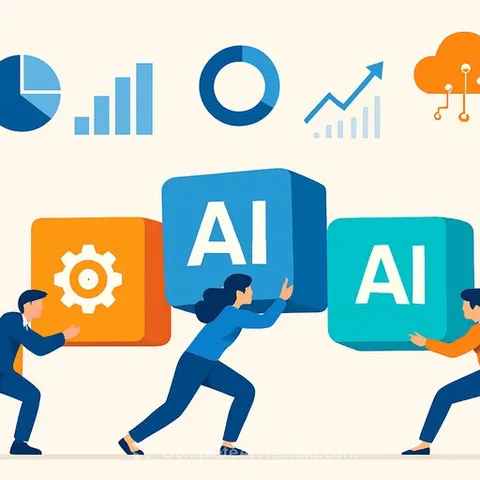
China's AI marketing technology sector is splitting into three distinct camps, according to a report from the advisory firm 易观. Platform giants, AI-native technology vendors, and traditional marketing agencies are now fighting over traffic, technology, and clients - with the balance of power shifting as AI moves from auxiliary tool to core production engine.
The three-way structure breaks down this way: Platform ecosystem builders like Tencent Ads, Ocean Engine, and Baidu Marketing aim to become the "utilities" of the industry, controlling underlying infrastructure and traffic. AI-native technology vendors - including Deep Intelligence, MafuShi, and TTD - dig deep into specific verticals. Traditional agencies such as BlueFocus and WPP are attempting to shift from execution to strategic empowerment.
Battlefield 1: Platforms vs. agencies over traffic and strategy
The core conflict: Platforms want to keep budgets and decision-making inside their own ecosystems, enabling direct "advertiser → platform" connections. Agencies earn their fees by selecting, combining, and optimizing platform capabilities for advertisers. Those two positions are incompatible by design, and tensions are mounting.
Platforms are increasing pressure through AI-driven self-service tools that bypass agencies entirely, squeezing the traditional profit margin on media price differences. Agencies face a do-or-die choice: upgrade from traffic buyers into brand builders and asset managers, or risk becoming irrelevant.
Battlefield 2: AI vendors vs. platforms on technology and ecosystem control
AI-native vendors create new value with new technology, threatening established platform rules for traffic allocation. Platforms respond by acquiring the competition, building rival products, or shutting them out of the ecosystem, the report said.
The "first-mover advantage window for technology vendors is short," the 易观 report said. "Once platforms discover the commercial value of a new technology, they can quickly catch up with or replicate it through massive capital and resource allocation." Technology vendors face three potential paths: acquisition by a platform, a deep binding as a core ISV, or independent survival in a squeezed market.
Battlefield 3: Agencies vs. AI-native providers - cooperation turning to rivalry
The cleanest model, according to the report, is a division of labor where AI vendors supply the products and agencies supply customer relationships and delivery. But that division is crumbling. Leading agencies are building their own AI tools, turning from customers of tech vendors into direct competitors. At the same time, independent AI vendors are signing brand clients directly, bypassing agencies.
The report said that "capability-complementary cooperation is the mainstream path" for both sides to serve large clients together. It also warned that agencies must "quickly fill their AI scenario capabilities through investment, cooperation or independent R&D" - else advertisers will question their relevance.
Why this matters for marketing professionals
If you work on the brand or agency side, the key takeaway is that buying decisions can no longer default to the easiest platform or the oldest agency relationship. Every partner you evaluate is fighting a three-front war for margin, and that pressure will affect your costs, data access, and strategic autonomy. The strongest positions combine breadth of audience data with depth of scenario-specific AI. AI for Marketing training has become a baseline expectation for brand-side marketers, not a differentiator. AI learning paths addressing scenario-specific applications can help marketing managers navigate these competitive shifts when evaluating or building partnerships.