
AI news ·
AI matches human judgement in mental health triage study
Two AI models trained on one million Reddit mental health narratives matched human raters in identifying root causes of distress, with PaLM 2 aligning 80% of the time. Researchers say the approach could speed triage in systems where waitlists stretch for months.
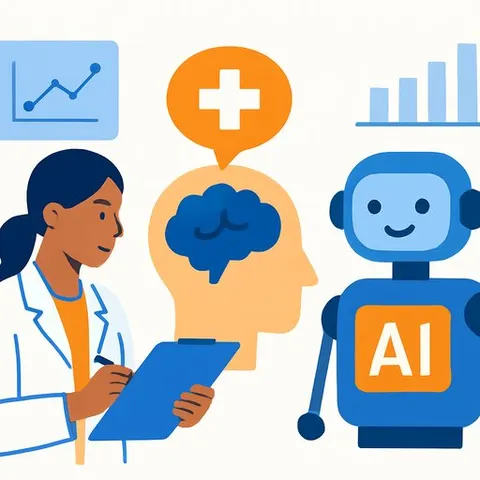
Two AI models trained on one million mental health narratives from Reddit have matched human raters in identifying root causes behind psychological distress, pointing to faster triage pathways for overloaded health systems.
Researchers at Victoria University spent two years building the dataset and training Google's PaLM 2 and AutoML systems. The models analysed real-world accounts shared on the platform, linking language patterns to root-cause classifications from Healthdirect Australia. A psychiatrist then manually classified 800 threads to create expert-verified training data.
How the models performed
The expert-verified data was fed back to the AI systems, which then assessed new threads independently classified by human raters. PaLM 2 matched human judgement in 80 per cent of cases, while AutoML achieved 68 per cent alignment.
The study found that once trained on verified clinical data, both models could meaningfully align with human judgement when identifying the deeper causes behind people's mental health difficulties. The researchers published their findings in AI for Healthcare research circles, noting the approaches carry limitations but could support screening and triage workflows.
Associate professor Khandakar Ahmed, who led the research with colleague Saima Rani, said: "Mental health is deeply personal, and every person has a different story behind their struggles. Two people can experience similar symptoms for very different reasons. We wanted to explore whether AI could look beyond the symptoms and recognise some of the deeper themes people describe in their own words."
Clinical validation and real-world use
Psychiatrist and University of Melbourne honorary associate professor Manjula O'Connor carried out the manual classification work that grounded the models in clinical reality. The team suggested potential applications in patient onboarding, reviewing patient stories, and digital mental health services.
O'Connor said: "With about 40 per cent of the population experiencing a mental illness at some time in their lives, this methodology has the potential to detect population-level changes to help prioritise public health approaches to mental illness in Australia."
Ahmed added that while AI already assists practitioners with tasks like note-taking during consultations, the possibilities extend further. The research contributes to a growing body of AI research examining how language models can support clinical decision-making without replacing human clinicians.
Why this matters for healthcare professionals
For clinicians and health service managers, the study signals a practical direction: AI tools that can process patient narratives at scale may reduce the time between first contact and appropriate care. An 80 per cent alignment rate with human judgement is not a replacement for clinical assessment, but it could filter and prioritise cases in settings where waitlists stretch for months. The key detail is the workflow - the models were trained on expert-verified classifications, not raw social media data alone. That validation step matters for anyone evaluating vendors making claims about AI-powered triage.