
AI news ·
AI on Trial: How Legal Battles Over Copyright Are Redefining the Future of Creative Industries
Disney and NBC Universal's lawsuits against Midjourney challenge how AI handles copyrighted characters. The outcome will shape IP rights and AI's role in creative industries.
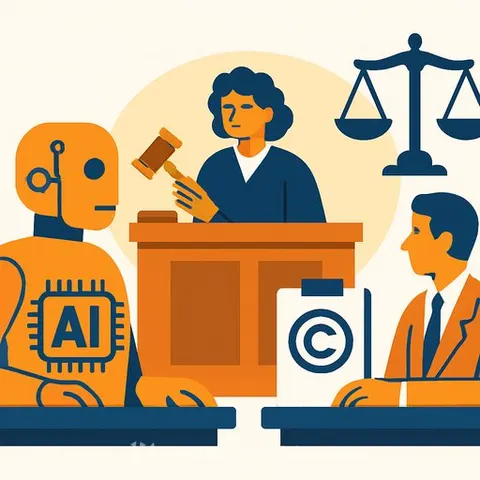
AI and Copyright: Legal Battles Redefining the Creative Industry's Future
Recent legal actions by Disney and NBC Universal against Midjourney, a generative AI image tool, highlight the increasing tension between intellectual property (IP) rights and AI technology. These lawsuits are more than isolated cases; they are setting precedents that will affect how creative industries, including video games, protect and manage their IP in an AI-driven era.
What’s at Stake in the Midjourney Case?
The core accusation is that Midjourney's AI reproduces copyrighted characters like Yoda and Homer Simpson without authorization. The evidence includes numerous AI-generated images closely resembling these protected works. This raises a fundamental legal question: can AI companies be held liable for copyright infringement when their tools generate such content?
Midjourney may argue it is merely a tool provider, akin to manufacturers of paint or software like Microsoft Word, and that users are responsible for how they use the product. If courts accept this defense, it could significantly weaken IP holders' ability to control unauthorized use of their work in AI training and output.
Potential Consequences of the Court’s Ruling
- If Midjourney prevails: AI firms might avoid licensing deals, potentially flooding markets with AI-generated content infringing on copyrights. This outcome could undermine protections for creative works and disrupt traditional IP enforcement.
- If Disney and NBC Universal win: Courts may require AI companies to obtain licenses for copyrighted materials used in training data or face liability for infringement. This would impose stricter obligations on AI developers and might slow innovation but strengthen creators’ rights.
This case forces courts to confront how generative AI replicates copyrighted material. Though AI systems store data in complex, probabilistic forms rather than explicit files, the ability to reproduce specific copyrighted characters with high accuracy suggests some form of stored infringing data. Legally, this challenges existing frameworks around copyright and digital reproduction.
Broader Implications for the Creative and Legal Fields
For professionals in law, especially those focused on intellectual property, these developments signal a need to rethink how copyright law applies to AI-generated content. The legal definitions of infringement, fair use, and liability must adapt to the technical realities of AI models.
Creative industries like video games are already experimenting with AI for development and content creation. However, the legal uncertainty around AI outputs means companies must carefully assess risks related to IP infringement and ownership. Failure to do so could lead to significant legal exposure.
Moreover, this legal scrutiny aligns with other regulatory challenges facing the industry, including app ecosystem openness, loot box regulations, and consumer protection in free-to-play models. Together, these issues are reshaping the legal environment for interactive media.
Preparing for a Shifting Legal Landscape
Legal professionals advising clients in tech and creative sectors should monitor these cases closely. Understanding how courts interpret AI’s role in content creation will guide contract negotiations, licensing strategies, and IP enforcement approaches.
Governments and courts worldwide will influence the outcome, making it essential to track jurisdictional differences and emerging regulations. Staying informed helps anticipate changes and advise clients proactively.
For those interested in expanding their expertise on AI’s intersection with legal frameworks, exploring targeted training can provide valuable insights. Resources on AI technology and its legal challenges are increasingly available to support legal professionals adapting to these shifts.
Ultimately, the future of AI in creative industries depends heavily on how courts balance innovation with IP protections. The Midjourney case is a pivotal moment in defining that balance.