
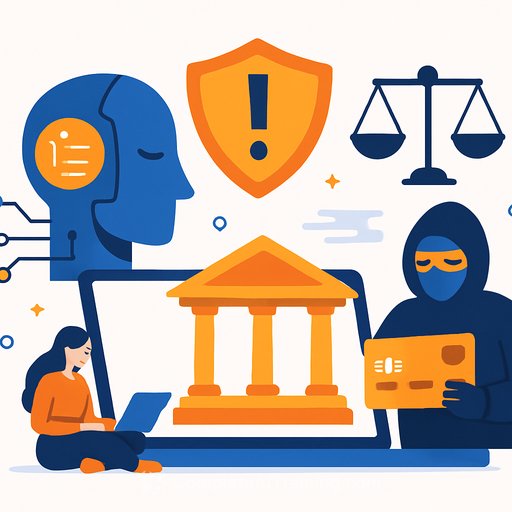
AI-Powered Banking Fraud on the Rise – Financial Institutions Fight Back
More than half of banking fraud now involves AI, with criminals and banks using similar technologies. However, banks face unique challenges such as ethical considerations and strict regulations that slow down their response.
Research from fraud prevention platform Feedzai reveals that 92% of financial institutions see fraudsters using generative AI. Over 40% report deepfakes in scams, and 56% have encountered AI-powered social engineering attacks. Voice cloning is a major concern for 60%, alongside AI-driven SMS and phishing scams.
Fraud Techniques Are Getting More Sophisticated
Scams no longer have obvious red flags like typos. Instead, they feature perfect grammar, realistic cloned voices, and synthetic videos of people who don’t exist. These AI-engineered scams are crafted to feel genuinely human.
Financial institutions now deploy advanced AI themselves to counter these threats. Nine out of ten banks use AI to detect fraud, with two-thirds adopting these tools in the last two years. Around 90% rely on AI-powered solutions for fraud prevention.
AI Is Delivering Real Results
- 40% report AI helped reduce fraud losses by 40-60%
- 43% saw a 40-60% efficiency improvement in fraud detection
- About half use AI for scam detection, 39% for transaction fraud, and 30% to fight money laundering
AI also accelerates fraud investigations and helps spot new tactics in real time. Behavioral analytics powered by AI is expected to have a growing impact on fraud prevention.
Challenges: Data Management and Ethics
Unlike criminals, banks must address data privacy laws like GDPR and CCPA. They need to ensure AI models avoid bias by using diverse datasets, thorough bias testing, and human oversight.
Nearly 90% of banks say data management is their biggest hurdle. Fragmented data and regulatory requirements slow AI adoption, especially for smaller institutions. Transparency and explainability are top priorities, critical for areas like anti-money laundering where decisions must be justifiable to regulators.
Building Trust in AI Systems
AI needs to be safe and trustworthy. Models must be transparent, robust, unbiased, secure, and well-tested to maintain customer confidence and meet regulatory standards. When done right, trusted AI accelerates innovation and strengthens defenses against fraud.
Financial professionals interested in expanding their knowledge of AI applications in finance can explore specialized training and courses to stay ahead. For comprehensive AI education tailored to finance roles, Complete AI Training offers relevant resources and certifications.