
AI news ·
AI scribes offer path to ease doctor paperwork as health worker shortage looms
A new QuickBlox report says AI can ease healthcare's paperwork burden as the WHO warns of a projected 10 million health worker shortage by 2030. The report points to clinical documentation and medical coding as key areas for automation, citing Kaiser Permanente's rollout of AI scribes across 600...
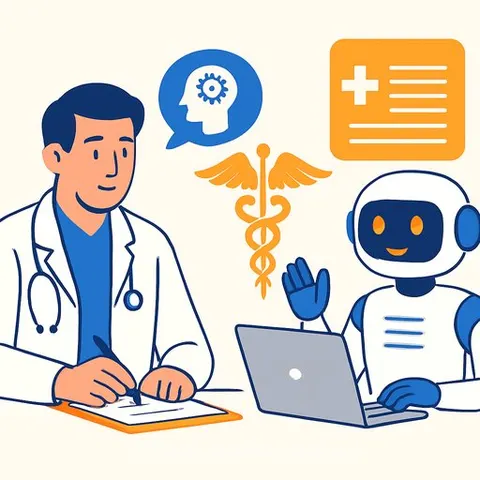
Artificial intelligence could take over repetitive paperwork and administrative tasks in healthcare, helping systems cope with a growing shortage of workers, according to a new report from QuickBlox. The report points to clinical documentation and medical coding as areas where AI tools can reduce the burden on clinicians.
The World Health Organization has warned that the world could face a shortage of 10 million health workers by 2030, with the problem expected to hit hardest in regions where healthcare systems are already under pressure. QuickBlox's report argues that technology can help existing staff handle more patients by removing work that doesn't require direct clinical attention.
The report highlights documentation and coding as prime candidates for automation. Note-taking and coding are described as some of the most exhausting parts of a clinician's job, and AI tools can prepare clinical documentation for doctors to review rather than requiring them to create every note manually.
The workforce math doesn't add up
"Inefficiency in healthcare doesn't exist in isolation - it collides with something bigger: the workforce gap," said Nate MacLeitch, CEO of QuickBlox. "Put simply, the numbers don't add up. The current system can't hold. Without telemedicine platforms for providers that help patients connect to the right clinician at the right moment, reforms - no matter how well-meaning - will fall short. And if we don't introduce tools that ease the paperwork and admin load, the staff left behind will keep burning out."
QuickBlox's Q-Consultation platform includes an AI-enabled scribe that can draft SOAP notes and suggest ICD-10 and CPT codes for clinicians to review. The company stresses that doctors remain in control of the final documentation. These are practical applications of AI for Healthcare that target the administrative load directly.
What early adoption shows
The potential benefit goes beyond saving time. The report cites Kaiser Permanente's rollout of AI scribes across 600 offices and 40 hospitals, saying the tools improved accuracy and allowed physicians to be more present with patients.
That's a shift in how AI is used in healthcare - not replacing medical professionals but taking on repetitive tasks so clinicians can spend more time with patients. The same logic applies to the billing side, where AI for Medical Billers can speed up coding and claims work that currently eats hours out of the day.
The report also looked at the problem from the patient end of the healthcare system. Patients are often directed to the wrong part of the system, creating unnecessary appointments, repeated assessments, and additional pressure on clinicians. AI can help at both ends - by helping patients reach the right care and by reducing the documentation burden on professionals once they're providing that care.
Why this matters for healthcare professionals
The workforce gap isn't a distant concern. If you're a clinician, coder, or biller, AI scribes and documentation tools will likely change how your day is structured within a few years. The doctors and nurses who adapt to reviewing AI-drafted notes rather than writing them from scratch will carry a lighter administrative load - and the shift could slow the burnout that's pushing experienced staff out of the field.