
AI news ·
AI shifts creator value from technical skill to creative vision
AI has collapsed the technical moat around creative work, making execution replaceable. The new competitive edge is taste and vision-knowing what story to tell, not which button to click.
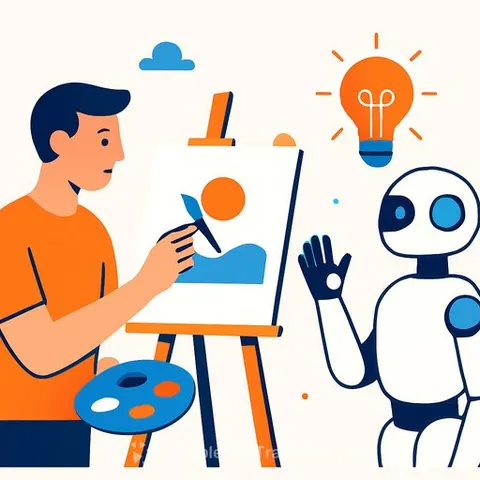
AI has automated the tedious technical execution that once defined creative jobs. The shift, described by entrepreneur Ash Kumra, forces founders and digital creators to stop operating as technicians and start acting as creative directors. The busywork is gone. The pressure to deliver strong ideas, sharp taste, and clear vision is now the only competitive edge.
The end of technical skills as a barrier
For years, proficiency in complex software functioned as a gatekeeping mechanism. Knowing how to edit a video timeline or format a pitch deck with precision created a moat around professional work. Generative AI has collapsed that moat. Execution alone no longer differentiates a creator.
Amanda Coffee, spokesperson for Higgsfield, said the change is exposing who actually has something to say. "At Higgsfield, we're seeing that when anyone can access professional production tools, the advantage shifts to the creator with the strongest idea, the best taste, and the clearest creative vision," she said. "The creator of the future is less a technical operator and more a creative director, using AI to turn an idea into something that could never have been produced before."
From slide tweaking to strategic thinking
The same dynamic is reshaping the boardroom. Founders who once spent nights adjusting font sizes and fixing formatting errors now hand those tasks to AI. The time reclaimed pushes them toward higher-stakes work: structuring a narrative, anticipating investor objections, and designing a story that lands.
This is not a downgrade of creative work. It is a redefinition of where value lives. The person who merely executes a brief is replaceable. The person who shapes the brief itself is not. For video editors, this means the craft shifts from timeline manipulation to pacing, emotional arc, and visual storytelling decisions that no prompt can fully capture. Learning to direct AI tools rather than compete with them is becoming the baseline skill. Courses focused on AI for Video Editors are emerging to help professionals make that transition.
Taste becomes the new credential
When technical barriers fall, taste rises in importance. A creator's ability to discern what is compelling, what is derivative, and what is genuinely original becomes the product. AI can generate infinite variations. It cannot decide which variation matters.
This places a premium on judgment developed through experience. Creatives who have spent years refining their aesthetic instincts now find those instincts are their primary asset. The tools are universal. The perspective is not. Resources tagged under AI for Creatives increasingly focus on this distinction between operating software and directing output.
Why this matters for creatives
The professionals most at risk are those who defined their value by their ability to operate tools. The professionals most in demand will be those who define their value by their ability to make decisions that AI cannot make. If your competitive advantage was knowing which button to click, that advantage is gone. If your competitive advantage is knowing what story to tell and why it will resonate, that advantage is now amplified by tools that execute at speed. The path forward is not to resist the automation of busywork. It is to become fluent in directing it.