
AI news ·
AI, synthetic biology, and robotics combine to improve enzyme performance
A CABBI platform boosted two enzymes' activity 16 and 26 times. It combines AI, synthetic biology, and robotic biofoundries to slash human input in enzyme engineering.
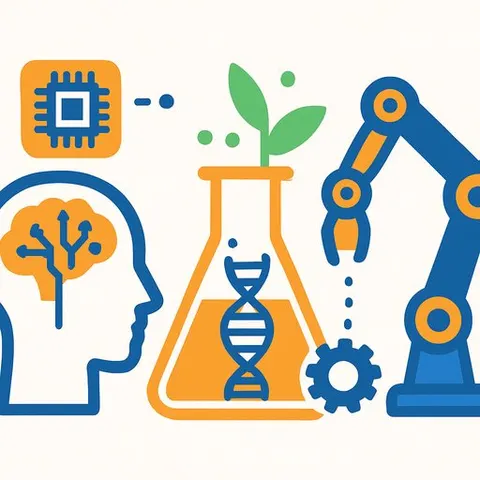
Researchers at the Center for Advanced Bioenergy and Bioproducts Innovation (CABBI) have built a system that combines AI, synthetic biology, and robotic biofoundries to make industrial enzymes far more efficient. In tests, the platform boosted the activity of two key enzymes by 16 times and 26 times, respectively, with far less human intervention than traditional protein engineering requires. The approach could accelerate the development of fully self-driving laboratories and support a shift toward a bio-based economy.
How the automated enzyme engineering process works
Enzyme engineering typically demands large specialist teams and months of trial and error. The CABBI team streamlined this by linking three components. First, an AI tool scans datasets of known enzyme structures and suggests sequence changes likely to improve performance. Next, automated biofoundry equipment-robotic labs that integrate computer-aided design and informatics-builds the proposed enzymes and runs rapid functional tests. The test results then feed into a second AI model, which learns from the data and generates better protein designs for the next round.
This work sits within a growing set of AI for Science & Research techniques where machine learning guides iterative experimentation. The closed loop-design, build, test, learn-repeats with minimal human input, shrinking both the clock time and the specialized expertise normally required.
Performance gains and a path toward self-driving labs
In a case study with two industrially relevant enzymes, the system increased activity by 16-fold and 26-fold. The researchers attribute the speed of these gains to the biofoundry's ability to run more design cycles in less time than manual methods allow. The biofoundry concept here goes beyond simple automation: the team envisions an AI-powered lab that designs a protein, builds it, tests it, and learns from the outcome entirely on its own before starting the next cycle.
The work was supported by CABBI, a U.S. Department of Energy Bioenergy Research Center funded through the Office of Science. By cutting time, labor, and cost from enzyme development, the platform aims to add value to agriculture, grow rural economies, and increase domestic energy production.
Why this matters for science and research
For researchers who synthesize or modify enzymes, the platform demonstrates a practical path to slash lead times and reduce dependence on deep domain expertise. A lab that adopts a similar closed-loop automation strategy-combining predictive AI with robotic wet-lab execution-can run far more design cycles per budget than manual approaches. The CABBI system's 16x and 26x activity improvements were achieved with less human input, not more, showing that self-driving lab concepts are moving from vision to usable infrastructure.