
AI news ·
Aimbridge rolls out LIFT labor tool portfolio-wide as housekeeping and laundry see pilot gains
Aimbridge Hospitality rolled out its LIFT labor forecasting tool across its entire managed portfolio after a pilot that delivered the largest productivity gains in housekeeping and laundry.
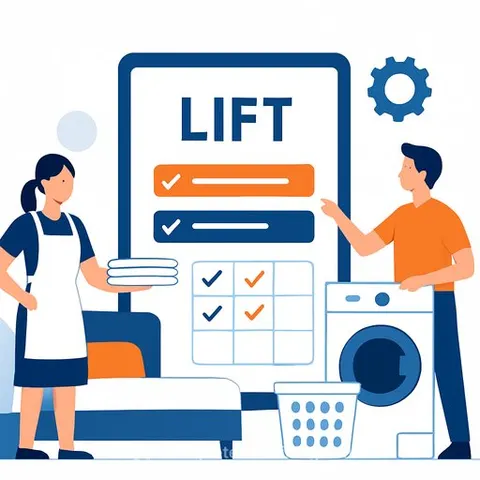
Aimbridge Hospitality has rolled out LIFT, a proprietary labor forecasting and scheduling tool, across its entire managed portfolio after a pilot that delivered the largest productivity gains in housekeeping and laundry. For hotel owners, the shift means staffing misalignment can now be flagged before the monthly financials close, rather than weeks after the cost has already landed.
The tool, short for Labor Insight & Forecasting Tool, pulls labor data from multiple property systems into a single view that property and finance leaders use to plan staffing by day, week, and month. Chris O'Donnell, Aimbridge's president of select service, told Hotel Business that labor is among the hardest parts of a hotel to get right and among the most consequential for profitability. The true cost of a staffing decision, he said, is hard to see when the first visibility arrives with the financials.
Forecasting, scheduling, and real-time execution on one screen
LIFT connects three functions hotels have typically managed in separate systems: the demand forecast, the schedule built against it, and what actually happens on the floor once the shift starts. Putting those side by side lets teams see where labor and demand are drifting apart before that drift appears as a cost. Aimbridge's goal is to adjust staffing before a hotel becomes meaningfully over- or under-staffed, rather than explaining the variance later.
The tool draws on data hotels already generate in their existing property systems and refreshes automatically. Nobody at the front desk is keying numbers into a new spreadsheet. Keryn McNamara, Aimbridge's chief information officer, said the company wants to use the large volume of data across its hotels to help teams act quickly and to give owners "a clear line of sight into how staffing decisions show up in hotel performance."
For owners with hotels under third-party management, the word that matters in that description is "finance." Aimbridge positions LIFT as a common reference for property and finance leaders together. The same forecast-versus-actual view the general manager works from is the one the asset manager can see. The problem LIFT targets is not the size of the labor line, but the lag between a staffing decision and the moment its cost becomes visible.
Where the pilot gains concentrated
Aimbridge ran LIFT through a pilot before the full rollout. Participating hotels saw measurable gains in labor productivity, with the largest improvements in housekeeping and laundry. Scheduling accuracy improved as planned labor moved closer to actual labor. The company said those gains came without a tradeoff in guest or team experience, and that early results since the portfolio-wide launch look similar.
No percentages have been published, which limits external benchmarking. What the pilot does establish is where the gains concentrated. Housekeeping and laundry are departments where the day's workload is tied most directly to how many rooms turned over, which suggests a demand-driven scheduling tool finds its most room to act there. Aimbridge also argues that correct staffing protects the guest experience that drives repeat bookings, improves GOP flow-through, and helps reduce associate turnover. Those are stated expectations, not reported outcomes, and the turnover claim has no published figure behind it yet.
An operator-built tool in a vendor-heavy market
LIFT is proprietary, which sets it apart from most hotel technology launches this month. A vendor tool can be bought for any property regardless of who manages it. An operator-built tool comes bundled with the management contract, making it part of how one management company compares with another when an owner is choosing or renewing. McNamara framed the launch as part of a broader commitment to invest in technology that directly supports owner profitability.
This is not Aimbridge's first internal build. The company previously launched a global S.P.A.R.K. platform and a data and reporting tool, and it recently brought three historic hotels under management, so the portfolio LIFT now covers is still growing. For a smaller operator without Aimbridge's data depth, vendor products remain the more likely path, which is where launches like Event Temple's AI Sales Coordinator agent fit into the broader conversation around AI for Hospitality & Events.
Why this matters for hospitality and events professionals
The premise O'Donnell laid out is one most hotel owners and operators will recognize: staffing decisions are made in real time, and their cost has traditionally been visible only in arrears. LIFT is Aimbridge's answer for its own portfolio. For professionals whose hotels sit with other operators, the same premise produces a sharper evaluation question than "do you use labor analytics?" It is whether the operator's labor reporting is leading or lagging, and whether the finance team and the property team are looking at the same forecast-to-actual view or reconciling two different ones after month-end.
What would make LIFT a real industry benchmark rather than a company claim is a number. Aimbridge has said pilot gains were measurable. The next development worth watching is whether it puts labor-cost or GOP flow-through figures behind those words, and whether owners in its portfolio start seeing the LIFT view in their own reporting packages.