
AI news ·
Appeals court revives antitrust case over hotel pricing software.
A federal appeals court revived an antitrust lawsuit accusing Atlantic City casino hotels of using Cendyn's Rainmaker pricing software to coordinate room rates.
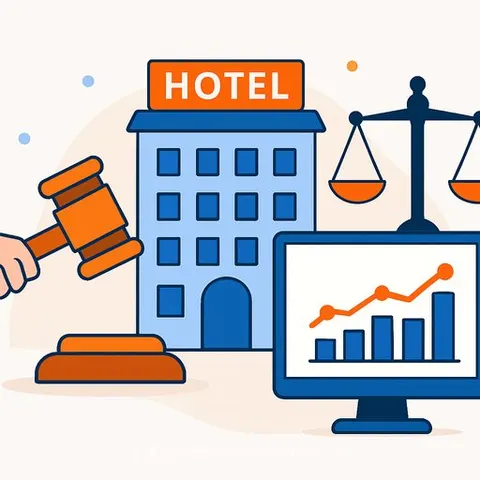
A federal appeals court has revived a lawsuit accusing several Atlantic City casino hotels of using shared pricing software to coordinate room rates, a ruling that could have implications for any hospitality business that relies on AI-driven revenue management tools.
The case centers on Rainmaker, a revenue management platform operated by Cendyn Group. According to the lawsuit, competing casino hotels fed non-public pricing data into the same system, and the software used that pooled information to generate rate recommendations. The plaintiffs argue this effectively turned the platform into a tool for coordinating prices among rivals.
The U.S. Court of Appeals for the Third Circuit did not decide whether that coordination actually happened. It ruled only that the allegations were serious enough to let the case proceed. The hotels deny any wrongdoing, and the facts have yet to be resolved in court.
Why the software itself isn't the defense
The law firm Mandelbaum Barrett PC, which analyzed the ruling, says the key issue isn't the technology. Antitrust law has never distinguished between competitors coordinating prices over the phone, at a conference, or through an algorithm. What matters is whether coordination occurred.
As the firm put it: "The court's opinion suggests that companies cannot assume that the presence of software automatically insulates a pricing strategy from antitrust scrutiny."
That distinction matters because pricing software is now standard equipment across hospitality, not just for casino operators. Independent hotels, brands, management companies, and restaurant groups all use similar tools to set rates. Many of those businesses have limited visibility into what data feeds their pricing recommendations or how the numbers are calculated.
Mandelbaum Barrett suggests that gap in understanding is itself a risk. Operators who don't know whether their software relies only on public market data - versus data shared by rivals - may not realize they are exposed until a lawsuit arrives.
Questions every operator should ask
The firm isn't advising hotels to unplug their pricing tools. Instead, it recommends a short list of questions for owners to raise with vendors and legal teams:
- What information goes into the platform?
- Does it rely on public market data alone, or does it draw on competitors' private numbers too?
- Are managers reviewing the software's recommendations before setting prices, or accepting them automatically?
- What do the vendor contracts say about how shared data gets used?
- Have compliance policies been updated to account for artificial intelligence tools?
These questions are directly relevant for professionals working in hospitality and events, where revenue management decisions increasingly happen inside black-box systems. Understanding what your software does with data is no longer just an IT concern - it's a legal one.
For executives and owners, the broader lesson is that responsibility doesn't transfer to a vendor when you buy a tool. The same applies to AI for Executives & Strategy more broadly: adopting automation doesn't outsource accountability.
What happens next
The Atlantic City case now heads back to the lower court for further proceedings, so a final answer on liability is still a ways off. But Mandelbaum Barrett expects the trend to keep building regardless of that outcome. As AI-driven pricing spreads through hotels, restaurants, and other consumer-facing businesses, courts and regulators are likely to keep examining how these systems work under the hood.
The firm's bottom line: technology can help a business make decisions, but it can't take the legal blame when something goes wrong. That responsibility still sits with the people running the business, not the software they bought to help them.
Why this matters for hospitality and events professionals
If you work in hotel revenue management, events pricing, or group sales, this case is a warning about the tools you may already use. A platform that promises smarter rates by pooling industry data could be creating antitrust exposure you haven't considered.
Before your next vendor renewal or software evaluation, ask where the data comes from and whether competitors contribute to it. Document the answers. And make sure someone with legal training reviews how your pricing systems actually work. For those looking to understand the broader implications of AI in this sector, AI for Hospitality & Events training can help teams recognize these risks before they become legal problems.
The court hasn't said the hotels did anything wrong. But it has said the question deserves a full hearing. That alone is reason for every operator using pricing software to take a closer look at what's under the hood.