
AI news ·
Apple’s AI Deal With Alibaba Faces US Government Pushback Amid China Tensions
Apple’s AI plans in China face U.S. government scrutiny over a deal with Alibaba amid rising geopolitical tensions. The partnership is key for Apple to compete in China’s AI-driven market.
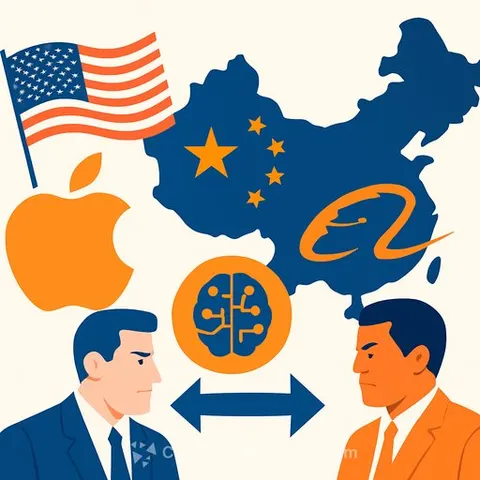
Apple’s AI Strategy in China Faces Pushback from Washington
Apple is betting heavily on artificial intelligence to maintain the iPhone’s competitive edge. However, geopolitical tensions between the U.S. and China are putting major roadblocks in the way of Apple’s AI ambitions in its second-largest market.
At the center of this conflict is Apple’s proposed partnership with Alibaba to integrate Chinese AI technology into iPhones sold in China. U.S. officials, including those from the White House and Congress, are closely reviewing the deal. Their concerns focus on the potential for boosting Chinese AI capabilities, expanding AI-powered chatbots that comply with local censorship rules, and increasing Apple’s vulnerability to China’s strict data and censorship regulations.
Geopolitical Frictions Affecting Apple’s China Operations
This scrutiny reflects broader challenges Apple faces balancing its business interests amid growing U.S.-China tensions. In 2022, U.S. pressure forced Apple to cancel plans to source memory chips from the Chinese firm Yangtze Memory Technologies Corporation (YMTC). More recently, tariffs on Chinese-made products, including the iPhone, have threatened to reduce Apple's profit margins.
Walking away from the Alibaba deal would carry even deeper consequences. China accounts for nearly 20% of Apple’s sales, and the partnership is crucial for delivering AI features tailored to a market known for tight regulation and fierce domestic competition. Without Alibaba’s AI integration, iPhones risk falling behind Chinese brands like Huawei and Xiaomi that are advancing rapidly in AI capabilities.
Government Scrutiny and Apple's Responses
- White House and Congressional officials have directly questioned Apple executives about the Alibaba deal.
- Discussions have focused on the deal’s terms, data sharing practices, and any legal agreements Apple might sign with Chinese regulators.
- Apple executives reportedly struggled to provide detailed answers during a March meeting with the House Select Committee on China.
This situation highlights the delicate balance for multinational companies operating in politically sensitive environments. Executives must carefully weigh compliance with local laws against national security concerns raised by their home governments.
For leaders involved in strategy, legal, or sales functions, this case underscores the importance of thorough risk assessment when forming partnerships in contested markets. Understanding the regulatory landscape and anticipating government pushback can be critical to sustaining long-term business success.
To stay informed about AI developments and compliance strategies relevant to your role, explore comprehensive resources and latest AI courses tailored for executives and professionals.