
AI news ·
Arca builds guardrails to keep human advisors in control of AI agents in wealth management
Arca raised $48.5 million to build an AI-native wealth management firm where agents handle analysis but humans control all trading and money movement.
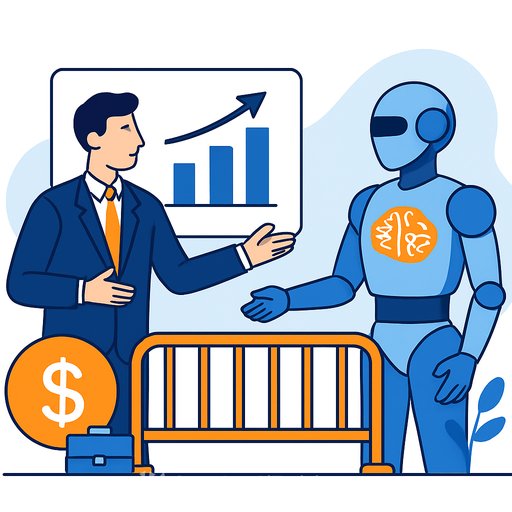
Arca, a wealth management firm billing itself as "AI-native," has raised $48.5 million in a round led by General Catalyst, with participation from Index Ventures and Venrock. The company's approach puts AI agents at the center of financial advisory work while keeping final decisions firmly in human hands - a structure its lead AI engineer describes as "agents prompt people more than people prompt agents."
At the AI Engineer New York conference this month, lead AI Engineer Aman Singh explained how the firm uses large language models to handle analysis and planning over extended timelines. Agent tasks at Arca can stretch up to ten days, though the work itself is not continuously running. "It's very stop-start, there are many actors in between, many decision points, many handoffs," Singh said.
A memory system built for long-horizon work
To manage this complexity, Arca developed an internal memory system that maintains persistence for every client. The system tracks what has happened, what actions are pending in the short term, what requires long-term monitoring, and which individual is responsible for each action. "All of this is being tracked by our memory systems that our agents contribute to," Singh said.
Arca uses models from frontier labs including Anthropic and OpenAI, with Claude serving as its primary model provider. Rather than relying on a managed agent framework, the company built its own harness that automatically selects the best model for a given task based on internal benchmarks. Owning this layer gives Arca the flexibility to switch providers when needed.
Deterministic guardrails for client safety
Safety controls are hard-coded, not left to model judgment. An agent's role is limited to analysis and proposing solutions. Trading and any movement of money are handled exclusively by human advisors. "All of our safety restrictions are fully deterministic," Singh said. "And they take the decision making off the agent's hands." The firm also runs verification checks on known AI security issues, including prompt injections.
For computation, Arca uses sandboxes with additional security measures for sensitive data access. The company built a translation layer that converts agent-written code into a strict, expected format before discarding the original code. "You install guardrails on that format before it reaches your back end," Singh explained. This allows agents to query, aggregate, and manipulate data to produce outputs like financial plans without direct access to production systems.
Improving the harness with a meta-agent
Arca feeds advisor feedback and agent traces into a "meta-agent" that analyzes the data and suggests changes to the model-selection harness. This creates a feedback loop where human decisions help refine which models handle which tasks. Professionals looking to build similar evaluation pipelines may find relevant frameworks covered in AI Agent Courses that address agent orchestration and safety patterns.
Why this matters for executives and finance professionals
Arca's architecture demonstrates a practical middle ground for regulated industries: AI does the analytical heavy lifting, but deterministic rules and human sign-off govern every action that carries financial risk. For leaders in finance, insurance, and other compliance-heavy sectors, the key takeaway is that agent deployment does not require handing over decision authority. The memory system and harness design also show how firms can maintain model independence - an important consideration as the landscape of providers and pricing continues to shift. Organizations exploring these patterns can find applied training in AI for Finance Courses that cover agent implementation within regulated workflows.