
AI news ·
Nadda releases AI roadmap to address India's healthcare staffing gaps
India has 9.6 doctors per 10,000 people, well below the global average of 18.3, as Union Minister J.P. Nadda released a knowledge paper on using AI to extend specialist expertise into primary care.
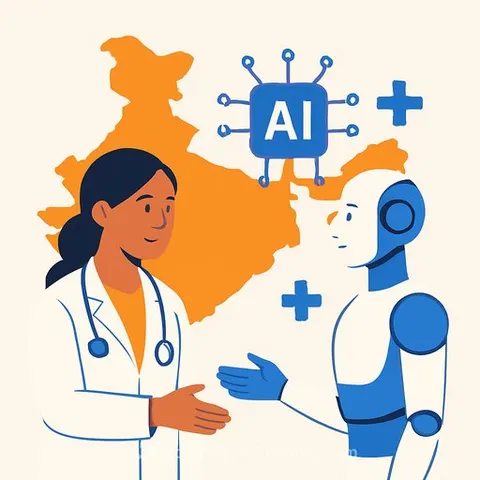
Union Health Minister J.P. Nadda released a knowledge paper Saturday outlining how artificial intelligence can address severe staffing and infrastructure shortages in India's healthcare system. The report frames AI as a tool to extend specialist expertise to primary care, a necessary step as chronic diseases and an aging population strain existing facilities.
India's population reached 1.47 billion in 2026, and more than 65 percent of deaths now stem from non-communicable diseases like heart disease, diabetes, and cancer. The demographic shift will intensify demand: the number of people aged 60 and above will cross 230 million by 2036.
Current ratios fall well below international benchmarks. India has 9.6 doctors per 10,000 people against a global average of 18.3. Nursing personnel stand at 27.2 per 10,000, hospital beds sit at 15.9, and MRI scanners number just four per million residents.
The role of artificial intelligence in clinical settings
The report said AI is not intended to replace doctors but to multiply specialist capacity by assisting in diagnosis, clinical decision-making and screening. AI-enabled diagnostics will likely serve as the first large-scale application. These tools can push specialist-level analysis down to primary and secondary hospitals, where imaging and screening bottlenecks currently delay treatment. Extending diagnostic accuracy to underserved districts would also reduce regional inequalities in care access.
Building on existing digital infrastructure
India already assembled the groundwork for AI for Healthcare through several national programs, including the Ayushman Bharat Digital Mission, the IndiaAI Mission, SAHI, BODH, and the National Medical Devices Policy 2023. The document said the next hurdle is shifting technology from isolated pilot projects into routine clinical practice. Hospitals will need standardized, machine-readable health data, a clear regulatory pathway, and established reimbursement models for AI-driven services.
Why this matters for healthcare professionals
Clinicians and hospital administrators should treat AI integration as a workflow adjustment rather than a distant upgrade. Diagnostic support tools will alter referral patterns and require updated training protocols for radiology, pathology, and primary care teams. Departments that map reimbursement requirements and data standards now will avoid deployment delays when regulators finalize approval pathways.