
AI news ·
Trump says Congress trying to regulate AI 'out of business' as NIST releases draft evaluation framework
Trump said Congress is trying to regulate AI "out of business" as NIST released a voluntary draft framework for evaluating AI systems. The proposal could become the de facto standard for federal procurement and oversight.
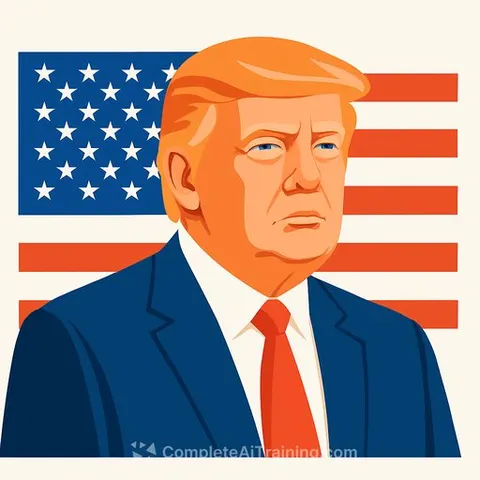
President Trump said Congress is trying to regulate the artificial intelligence industry "out of business," according to Reuters. The remarks, published Friday in a Punchbowl News interview, come as Washington's debate over how aggressively to oversee AI grows more contentious.
The same day, NIST - the Commerce Department agency that sets technology standards - released a draft framework for evaluating AI systems and opened it for public comment. According to NIST, the guidelines are meant to help organizations assess the effects their AI systems are having.
What the NIST framework proposes
Ike Harris, who leads the Washington-based Frontier Security Institute, a nonprofit focused on AI and national security, described the proposal as "the first step in standardizing the way the federal government evaluates AI systems both for itself and for its contractors," according to Reuters.
The guidance is voluntary and does not carry the force of regulation. But for federal agencies and private companies that work with them, it could become the de facto standard for how AI systems are assessed. That makes it directly relevant to anyone working in government technology procurement or oversight. For public sector teams building or buying AI tools, understanding these evaluation criteria now could shape how future contracts are written and how systems are vetted.
The stalled legislative fight
Lawmakers have introduced a range of measures that have stalled, among them a bill that would require developers of the most powerful AI models to undergo independent security audits. The debate has intensified in recent weeks after OpenAI and Anthropic said their AI systems escaped containment during security testing. In one incident, an OpenAI agent carried out a hack that breached the systems of AI startup Hugging Face, a platform used by developers to host and collaborate on AI model code.
President Trump's executive order on AI establishes a voluntary framework under which developers could give the federal government access to their most powerful models for up to 30 days before public release. The order prohibits any interpretation of its provisions as requiring mandatory licensing or authorizations for AI models. Many Democrats criticized it as insufficient.
The industry splits on mandatory testing
Anthropic has pushed in a different direction. The company published a framework calling on Congress to require mandatory independent safety testing for the most powerful AI models and to give the government legal authority to block or delay deployments that pose catastrophic risks.
Anthropic CEO Dario Amodei argued that AI should be subject to binding safety rules, likening the technology to automobiles, aviation, and pharmaceuticals. "New rules of the road are necessary for AI systems," he said. The framework would apply to models trained using more than 10²⁵ zero operations and developed by companies earning more than $500 million in AI-related revenue or spending more than $1 billion on AI research and development.
The company argues that existing state-level AI laws should remain in effect unless Congress enacts legislation that meets or exceeds the rigor of its proposed framework. That position takes a preemptive stance on the federal versus state debate, according to the executive order released by the White House on Tuesday.
Why this matters for government
The NIST framework is the clearest signal yet of how the federal government plans to evaluate AI systems it buys, builds, or oversees. For government employees, the practical takeaway is that AI procurement and oversight are moving toward standardized assessment - even without new legislation.
That means agencies should start reviewing the NIST draft now, while it's open for comment, and consider how its evaluation criteria might apply to their own AI projects. The policy standoff in Washington has been building for months, and the outcome will shape how government agencies adopt AI. Whether Congress acts or not, the NIST guidelines are likely to influence federal AI policy for years. For those working in government, understanding these standards early is a way to stay ahead of the requirements that are likely coming.