
AI news ·
AI transforms public-sector risk management but demands careful human oversight
AI speeds threat detection and compliance monitoring in public agencies but risks overreliance, inacc
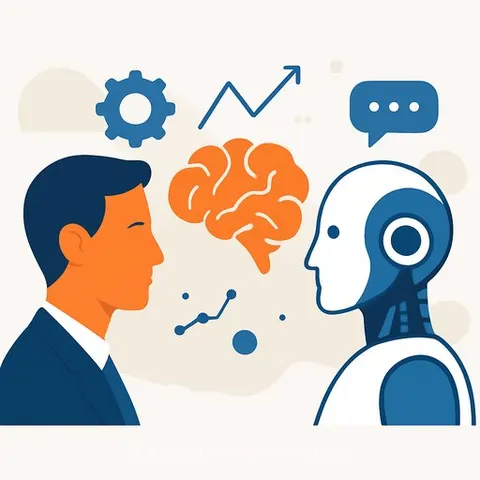
Artificial intelligence is transforming risk management in public-sector agencies by enabling faster detection of threats, automating compliance monitoring, and improving operational awareness. But the benefits come with significant risks - including overreliance on automation, inaccurate outputs, and data bias - that require careful governance and strong human oversight. For managers, the challenge will be integrating AI strategically without ceding decision-making authority to the technology.
The shift is already underway. Public-safety agencies, courts, and government offices generate enormous volumes of operational data, cybersecurity logs, and compliance records. Traditional manual reviews and periodic audits can't keep pace. AI tools - machine learning for pattern recognition, predictive analytics for risk scoring, and automated monitoring systems - now allow organizations to process this information in near real time.
One of AI's greatest advantages is speed. Instead of waiting weeks or months for an audit to uncover problems, AI systems can flag anomalies as they happen. This enables agencies to move from reactive risk management toward proactive prevention. For example, AI can analyze cybersecurity logs to detect suspicious behavior that might go unnoticed during manual review.
AI accelerates risk detection and monitoring
Predictive analytics and risk-scoring automation help leaders prioritize threats based on likelihood and potential impact. This is especially valuable in resource-constrained environments where every issue cannot be addressed at the same level of urgency. Continuous compliance monitoring is another practical application: AI tools can validate documentation, track policy adherence, and flag deviations from operational standards without adding to administrative burdens.
The article emphasizes that AI "should not be viewed as a way of reducing headcounts. Rather, it should be viewed as a way of making existing personnel more efficient and letting them focus on tasks that require their unique expertise and experience." Examples include emergency communications centers using AI to handle non-emergency calls, and court systems deploying chatbots as virtual counter clerks for less-complex cases.
Challenges: overreliance, inaccuracies, and bias
AI systems are not infallible. They can generate inaccurate conclusions or fabricated information - often called hallucinations - due to flawed training data or model limitations. In risk-management environments, this can lead to serious operational, compliance, or cybersecurity failures. Data bias is another concern: if training sets contain historical inaccuracies or incomplete information, AI outputs may amplify those issues. This is especially critical in justice and government settings where fairness and accountability are paramount.
Organizations must also guard against overreliance on automation. AI lacks the contextual understanding, situational awareness, and discretionary reasoning that experienced personnel bring to complex decisions. Relying too heavily on system-generated outputs without understanding the broader operational context can expose agencies to additional risk.
Human oversight remains critical
The principle of keeping the "human in the loop" consistently emerges as essential. AI should support decision-making, not replace it. Human review ensures that outputs are validated and interpreted before action is taken - reducing errors, preventing overreliance, and preserving accountability. Personnel using AI tools must understand both the technology's capabilities and its limitations. Continuous monitoring and regular evaluation of AI systems help maintain accuracy and alignment with organizational risk tolerance.
Structured governance frameworks, such as the National Institute of Standards and Technology's AI Risk Management Framework, provide guidance for implementing AI responsibly. These frameworks help define governance responsibilities, establish validation processes, manage data security, and ensure compliance with regulatory obligations. They also reinforce the importance of maintaining human involvement throughout AI-supported processes.
Why this matters for management
For managers, the successful integration of AI into risk management will hinge on balancing innovation with governance. The most effective leaders will treat AI not as a replacement for human expertise but as a tool that enhances operational visibility and supports proactive decision-making. This requires investing in training, establishing clear oversight policies, and adopting structured risk-management frameworks. Those who approach AI strategically - with accountability and human judgment at the center - will strengthen their organization's resilience without exposing it to the new risks that unchecked automation can bring.
For more on AI for Government training and governance, and AI for Management decision support, visit the linked resources.