
AI news ·
Artificial Republicans’ Health Care Plan: When Dr. AI Replaces Real Doctors and Millions Lose Coverage
Millions risk losing Medicaid as hospitals face closure. The GOP’s health plan pushes AI for remote care amid cuts that raise costs for many while benefiting the wealthy.
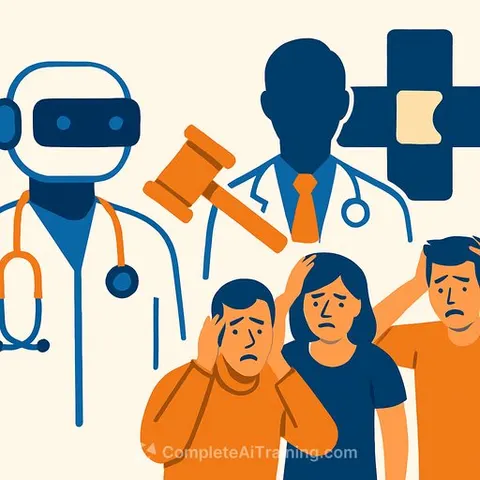
Artificial Republicans’ Health Care Plan: Dr. AI Will See You Now
Millions of Americans face losing Medicaid coverage as hospitals are on the brink of closure. Robert F. Kennedy Jr., Secretary of Health and Human Services (HHS), has announced plans to expand artificial intelligence (AI) access so patients can “avoid emergency rooms” by receiving care remotely.
This approach comes amid significant cuts to health spending and research, alongside proposals to raise out-of-pocket costs for many. These measures aim to fund tax cuts that disproportionately benefit wealthy individuals. At the center of this shift is AI, promoted as a replacement for traditional medical care provided by doctors, nurses, and emergency staff.
AI at the Forefront of Health Policy
During congressional budget hearings, Kennedy emphasized that AI is the future of health care. The administration supports protecting AI from state and local regulations, encouraging its broader use. This aligns with corporate interests seeking to reduce costs or rely less on human labor.
For many, AI is already part of daily life—drafting emails or searching for information online. In health care, however, AI’s track record is more concerning. For example, UnitedHealth Group has been accused of using an algorithm with a “90-percent error rate” to deny claims and discharge seriously ill patients prematurely.
Kennedy highlighted FDA plans to incorporate AI into Phase 3 drug trials to cut costs and speed up product approvals without animal testing. He also promised to expand telehealth and AI technologies in rural areas with limited medical access, suggesting that AI tools could diagnose conditions like strep throat over the phone with high accuracy.
Notably, Kennedy, a known vaccine skeptic, also admitted, “I don’t think people should be taking medical advice from me,” raising questions about the reliability of AI-driven care promoted by his department.
Medicare and AI: Cost Savings or Risky Gamble?
The House Ways and Means Committee proposes using AI to detect and recover improper Medicare payments, allocating $25 million for AI contractors and data scientists. The goal is to reduce fraud and overpayments in traditional Medicare.
However, experts warn this may be premature. David Lipschutz from the Center for Medicare Advocacy points out that many improper payments stem from incomplete paperwork, not outright fraud. AI’s ability to accurately judge medical necessity—which often requires nuanced clinical judgment—is questionable.
There is no clear mechanism to appeal AI decisions, raising concerns that patients could be unfairly penalized for services they already received. Such automated reviews risk oversimplifying complex medical coverage rules.
Alex Lawson, executive director at Social Security Works, criticized the proposal as a “get-rich-quick gimmick” pushing tax cuts for the wealthy at the expense of patient care.
Medicaid Cuts and Their Consequences
All this unfolds alongside Republican efforts to slash Medicaid, the primary insurance for low-income and disabled Americans. Proposals include imposing strict work requirements—80 hours per week—which many argue are unrealistic and punitive.
The reconciliation bill tied to these changes is expected to strip Medicaid and Children’s Health Insurance Program (CHIP) coverage from over 10 million people. This reduction is intended to offset tax breaks for rich individuals.
Hospitals, especially in rural areas, face financial strain as Medicaid cuts reduce supplemental payments that help cover care for low-income patients. Many providers warn these cuts could force closures of critical health facilities.
The bill also limits premium subsidies for Affordable Care Act marketplace plans, risking coverage loss for millions. Penalties are proposed for low-income individuals whose incomes exceed initial estimates when applying for subsidies.
What This Means for Insurance Professionals
Insurance professionals will likely encounter increased challenges as coverage shrinks and AI tools play a bigger role in claims processing and payment decisions. The shift to AI-driven reviews may lead to more denied claims and disputes, requiring close attention to documentation and appeals processes.
Understanding the proposed Medicaid work requirements and subsidy changes is vital. These policy shifts will affect enrollment numbers, claim volumes, and patient access to care.
AI’s expanding presence in health care underscores the need for insurance workers to stay informed on AI developments and their practical impacts. For resources on AI and related skills, explore Complete AI Training.
Final Thoughts
The current health care plan under Republican leadership places heavy emphasis on AI to cut costs and replace traditional care. Meanwhile, millions risk losing coverage due to Medicaid cuts and subsidy rollbacks. For insurance professionals, staying prepared means understanding how these changes affect claims, coverage, and patient access.
Though AI promises efficiency, relying too heavily on automated systems for critical decisions—especially in Medicare and Medicaid—may create new challenges for patients and providers alike.