
AI news ·
Australian aged care algorithm locks assessors out of overriding outcomes they believe are wrong
Australia's aged care algorithm under-assesses some people's needs, but internal documents confirm assessors have no legal authority to override the result.
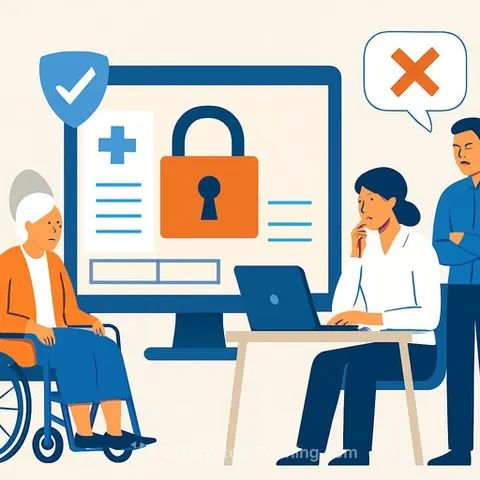
Australia's aged care assessment system has exposed a critical flaw in automated decision-making: assessors are identifying cases where an algorithm appears to understate a person's needs, but internal documents show they lack the legal authority to override the result. The dispute centres on the Integrated Assessment Tool (IAT), introduced as part of a new funding model for home-based aged care, and has triggered a political debate that reaches far beyond one country's policy machinery.
Health systems globally are introducing algorithms, AI and automated decision-support into processes that determine access to care, prioritisation and resource allocation. The Australian experience illustrates why human oversight must be designed into those systems at the level of workflows, governance and legislation rather than simply stated as a principle.
When human oversight exists only on paper
The Australian Government describes the IAT as part of its Single Assessment System for aged care. It uses dynamic questioning, validated assessment tools and clinical triggers to build a picture of an older person's needs. The government said the system was developed through consultation with geriatricians, clinical assessors, sector organisations and older people.
Documents obtained under freedom-of-information legislation indicate officials realised shortly before implementation that assessors could not legally override certain outcomes, even when professional judgement suggested the allocated level of support was insufficient. Assessors subsequently reported cases in which people appeared to have been under-assessed and raised concerns about being unable to reconcile those outcomes with their professional responsibilities. The government has been reviewing elements of the system, but the core governance problem remains: a rules-based process carries significant consequences for care while the professional conducting the assessment has limited authority to intervene.
That distinction will become increasingly important as healthcare automation advances. Human oversight is often included in AI strategies, regulatory frameworks and procurement requirements. Oversight has little practical meaning if the human involved can see that something appears wrong yet lacks a defined mechanism to correct, escalate or suspend the decision.
Automation changes professional responsibility
Healthcare organisations have good reasons to automate parts of assessment and allocation. Standardised tools can reduce variation, process large volumes of information and help health systems distribute scarce resources more consistently. In ageing populations facing workforce shortages and rising demand, those potential efficiencies are particularly attractive.
But consistency and accuracy are not the same thing. Older people with cognitive impairment, frailty, mental health problems or rapidly changing conditions can be difficult to represent through standardised questions and thresholds. Clinical and care professionals often contribute precisely because they can recognise circumstances that do not fit neatly into a predefined model. Removing or restricting that discretion changes the role of the professional. Instead of using technology to support judgement, the professional can become responsible for administering a process whose outcome they may not fully control.
These tensions extend beyond aged care. Similar dynamics emerge when algorithms prioritise waiting lists, predict deterioration, recommend treatment, allocate capacity or determine which patients receive additional monitoring. The more consequential the automated decision, the more important it becomes to specify not simply whether a human is involved but what that person is actually empowered to do. For regulatory affairs specialists navigating these requirements, AI Regulatory Compliance Courses address the practical governance structures that turn oversight principles into operational reality.
Implementation needs an escape route
Australia's experience provides a practical lesson for healthcare organisations introducing AI and algorithmic decision-support. Human oversight needs an operational mechanism. Systems require clear escalation pathways, authority to challenge outcomes, documentation of overrides and processes for feeding those exceptions back into evaluation and improvement.
Those mechanisms can also generate valuable evidence. If professionals repeatedly override an algorithm for particular patient groups or clinical circumstances, that may reveal limitations in the underlying model or assessment process. Human intervention then becomes more than a safety mechanism; it becomes a source of information about where technology fails to reflect real-world complexity.
The same principle applies to regulation. Europe is introducing increasingly detailed requirements for high-risk AI systems, while countries including the UK are developing professional and organisational frameworks for healthcare AI. Yet regulations will ultimately be tested inside individual clinical and care processes, where decisions have to be made about who can intervene and under what circumstances.
Why this matters for healthcare professionals
The critical question is not whether healthcare should use algorithms to support difficult decisions. It is whether the system remains capable of recognising and correcting an outcome when the real person in front of a professional does not fit the model. For clinicians, assessors and care coordinators, the practical takeaway is to examine any automated decision-support tool your organisation adopts and ask one question before it goes live: what is the documented pathway for overriding an output you believe is wrong? If the answer is unclear or nonexistent, the governance gap that tripped up Australia's aged care system is already present in your workflow. Policy leads and implementation teams can build relevant expertise through structured training such as AI Public Policy Courses that focus on translating oversight requirements into operational design.