
AI news ·
Australian creative workers remain concerned about AI job threats despite Anthony Albanese's promises
PM Albanese pledged new copyright laws to protect creatives from automation. But with 300 Netflix shows using AI, workers remain anxious.
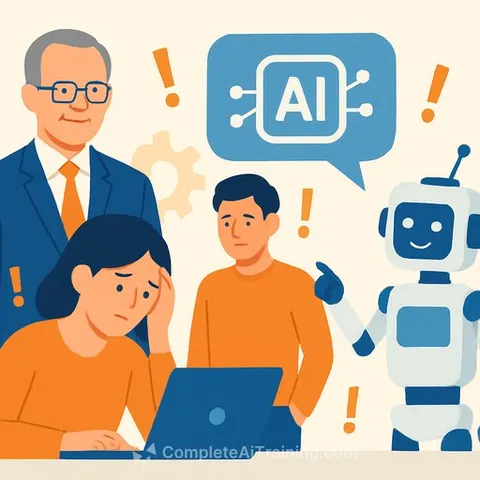
Prime Minister Anthony Albanese has promised that Australian writers, musicians, artists and journalists will retain control of their work under new laws, but the nation's creative workforce remains deeply uneasy about AI's expanding threat to their livelihoods. The mid-July speech, part of the government's broader AI policy outline, acknowledged that AI is "already part of our daily lives" and that not everything produced in Australia is "up for grabs."
Albanese said the government would make AI companies accountable for the water and power their data centres use and stressed that copyright legislation would be enforced. "Australian writers, musicians, artists and journalists must retain ownership and control of their work. Our laws will spell that out, plain as day," he said. He also framed AI as a tool for job creation, not destruction. "We should not treat AI as a threat to good jobs - we must use it as an instrument to help create them," he said.
A reality already filled with AI
Despite the pledges, the evidence of AI's intrusion into creative work has piled up for years. AI-written short stories have been shortlisted for literary prizes, AI-generated songs have earned radio play, and AI voices now narrate audiobooks. Netflix revealed this month that around 300 of its shows have used generative AI so far in 2026. In film, A24's partnership with Google to develop AI filmmaking tools and Martin Scorsese's backing of AI for storyboarding have drawn public backlash.
In journalism, "streamlining" and "efficiency" have become common euphemisms for roles lost to automation. More than half of new articles on the internet are now produced by AI, according to recent data. Writers who still work with human hands must now spend energy ensuring their prose doesn't sound like a machine's.
Outsourcing imagination
The creep of AI into creative tasks normalises quick fixes over mental effort. When the world's richest man says he will use AI to make his own version of Christopher Nolan's *The Odyssey*, the message is blunt: if you don't like a film, let a machine redo it for you. That logic, repeated across industries, feeds a cycle where tasks are offloaded to AI not because they should be, but simply because they can be.
For anyone who values art made by people-stories penned, music played, films led by human actors-the daily drumbeat of wins for the machines is dispiriting. The question posed by Alex Garland's *Ex Machina*, where a tech CEO feeds humanity's data into AI with disastrous results, no longer feels like science fiction. Natural beauty becomes a backdrop for destruction. The same fear hangs over human expression itself.
Why this matters for creatives
The government's promises address copyright and data centre accountability, but they do not halt the immediate forces reshaping the creative job market. Redundancies, vanishing freelance commissions, and the pervasive belief that a computer is faster, cheaper, or smarter than a person have already changed the landscape. For artists, writers, musicians, and journalists, the worry isn't just about stolen work-it's about whether human imagination will be treated as a permanent necessity or a disposable luxury. Without concrete measures that protect the actual work of making art and reporting news, the sector's anxiety will not fade.