
AI news ·
Balancing Creativity and AI: Protecting Human Music Makers in the Age of Artificial Intelligence
AI transforms music creation, challenging intellectual property laws and raising questions on protecting human creators. Updated, fair regulations are essential.
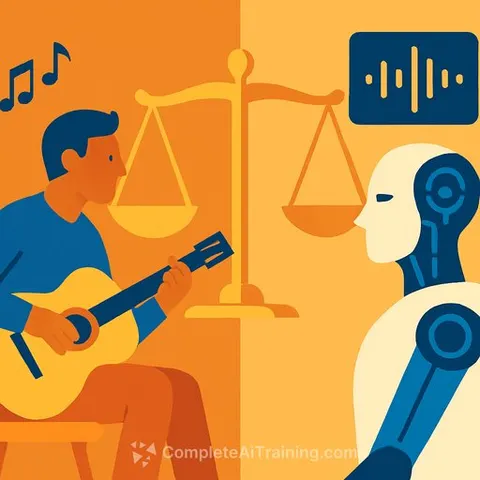
Intelligence, Bits, and Intellectual Property: Music in the New Era
World Intellectual Property Day, observed on April 26, 2025, focused on music and intellectual property, offers a moment to consider the legal frameworks that support creators. As artificial intelligence reshapes how music is created and shared, these protections face unprecedented challenges. AI can now generate songs in seconds, imitate legendary voices like Frank Sinatra’s, and enable anyone with a smartphone to remix or edit sound. The question is: how do we protect human creators while embracing AI as a creative tool?
AI and Music: The Gap Between Law and Technology
Artificial intelligence is no longer just playing notes—it composes entire songs. Platforms like Suno, Udio, and OpenAI’s Jukebox create original music tracks including lyrics, melodies, harmonies, and vocal performances that sound human. Some AI systems are even trained on existing music, allowing users to generate new pieces in various artists’ styles or moods within seconds.
This innovation prompts critical legal questions: Are these AI-generated songs original creations or derivative works? Who owns the rights—the user who enters the prompt, the company behind the AI, or the original artists whose styles or voices are mimicked without consent? Current intellectual property laws offer no clear answers, leading to confusion and uncertainty for creators and businesses alike.
The issue isn’t negligence from lawmakers or AI developers. It’s the lag between how fast new technologies hit the market and how slowly legal systems adapt. AI tools capable of instant music production are publicly accessible, while legal frameworks are still debating basic definitions.
Many musicians express frustration. Years of developing unique sounds can be overshadowed when AI produces near-identical versions instantly, often without permission, recognition, or royalties. The replication of an artist’s voice—a deeply personal and identifiable trait—is particularly troubling. Meanwhile, some creators see AI as a way to push creative boundaries, but they require clear rules to protect their rights and ensure fair use.
Adding to the challenge, intellectual property laws vary by country. Music now crosses borders effortlessly and instantly, but legal protections do not. This inconsistency increases uncertainty and calls for updated international regulations with uniform standards.
Fair Use or Infringement? The Old Dilemma in a New Wrapper
Music law has long grappled with issues around remixes, samples, and covers. AI intensifies these challenges. Anyone can now create mashups or rewrite lyrics using AI without studio access or legal consultation.
A mashup typically combines instrumental parts of one song with vocals from another, raising the question: when is this a creative tribute, and when does it cross into copyright infringement? Courts have addressed similar disputes, such as the famous Blurred Lines case, where Marvin Gaye’s family accused Robin Thicke and Pharrell Williams of copying elements from Gaye’s song.
AI raises fresh questions. Is a musical style itself protectable? What about an artist’s voice, like Michael Jackson’s or Ofra Haza’s? Beyond copyright, voices are an extension of personal identity, raising privacy concerns if replicated without consent.
Scarlett Johansson vs. OpenAI
The case of Scarlett Johansson highlights these issues. Johansson accused OpenAI of using a voice strikingly similar to hers in their AI system without permission. She had declined OpenAI’s request to lend her voice, yet the AI’s voice was reportedly indistinguishable from hers—even to her own family and friends. OpenAI denied intentional imitation and suspended the voice’s use, but the incident underscored the urgent need for legal regulation regarding AI and personal rights.
Challenges for Creators Today
Creators now must act like investigators, analyzing whether new songs unintentionally resemble existing works, whether influenced subconsciously or through AI models trained on vast libraries. The freedom to "play from the heart" is increasingly constrained by legal risks and platform policies.
Furthermore, platforms like YouTube and Spotify use AI-driven algorithms not just to recommend music but to shape public taste. This raises questions about who controls music distribution and, by extension, cultural and economic power within the industry.
Music as Intellectual Real Estate: Why Ownership Matters More Than Ever
Think of music as intellectual real estate. Each composition is an asset that can generate income through royalties, licensing, streaming, and performances. Without strong legal protection, creators risk losing control over their work and potential revenue.
In an era when copying is effortless, intellectual property rights become essential. They are not restrictions but fundamental safeguards that sustain a vibrant, diverse cultural landscape.
Looking Ahead: Protecting Original Human Contribution
Artificial intelligence changes the music industry’s landscape, raising complex legal, ethical, and cultural questions. The answer lies neither in outright bans nor in unrestricted freedom, but in balanced, updated legislation that reflects new realities.
Lawmakers need to revisit concepts like “fair use,” “originality,” and even the definition of “creator,” which currently requires human authorship. Protecting genuine human creativity is more important than ever. When technology can replicate and distribute music instantly, recognizing and securing original contributions ensures culture remains dynamic and meaningful.
On World Intellectual Property Day, it’s crucial to reinforce the importance of an updated, fair, and global legal framework that respects creators’ rights while allowing innovation to flourish in the era of AI.
For those interested in the intersection of AI, creativity, and law, resources on AI applications and legal considerations can be found at Complete AI Training.