
AI news ·
Banking Gets Personal: How AI and Automation Are Transforming Your Money
Banking is shifting to AI and automation, offering faster, personalized services like instant loan approvals and AI financial advisors. This digital change brings efficiency but also raises privacy and bias concerns.
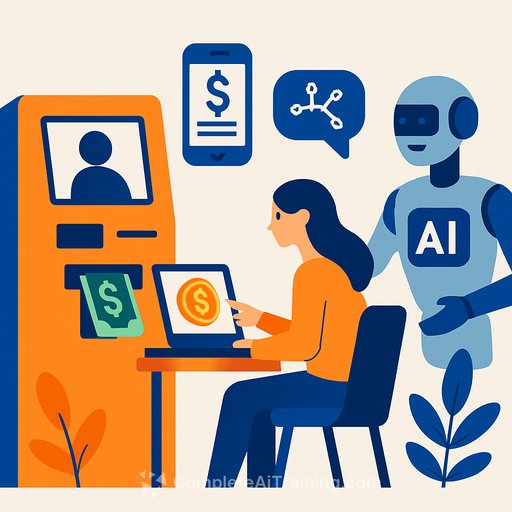
The Future of Banking: Automation, AI, and Personalized Finance
When was the last time you stepped into a bank? For most, it’s a distant memory. Traditional banking tasks like depositing checks or applying for loans have mostly moved to our phones. Now, with a few taps, you can transfer money, check balances, or even invest in stocks. Banking is digital—and that shift is accelerating.
But the change isn’t just about going online. It’s about how banks function behind the scenes. Automation, artificial intelligence (AI), and personalized finance are transforming processes such as loan approvals and customer service. This evolution challenges traditional models, whether the industry is ready or not. Some worry AI will replace jobs, while others see it as a way to make banking faster, cheaper, and more accessible.
How AI and Automation Are Changing Banking
For decades, transactions required tellers and piles of paperwork. Today, AI handles much of this work. It can approve loans, detect fraud, and even anticipate financial behaviors before decisions are made. Automated financial advice is becoming mainstream. Banks and fintechs use AI to offer personalized budgeting tips, investment suggestions, and credit-building strategies.
One notable development is the rise of robo advisors. These AI-driven tools manage investments without human intervention. They analyze financial data and build portfolios based on risk tolerance and goals. Robo-advisory services simplify investing and reduce costs, making finance more accessible.
Customer service is also evolving. Instead of long hold times, many banks deploy AI chatbots that answer questions instantly. These bots can assist with transactions, recommend products, and detect unusual spending patterns. While still improving, some banks combine AI with human advisors to create a smoother experience.
The Rise of Hyper-Personalized Finance
Think of walking into a coffee shop and getting exactly the drink you wanted—even before ordering. Banking is heading in that direction. AI and big data allow banks to deliver highly personalized financial experiences. They monitor spending habits, savings goals, and lifestyle choices to offer relevant recommendations.
For example, instead of a generic savings account, you might get an account focused on travel perks if you frequently spend on flights. If your AI assistant notices recurring late fees, it might suggest automatic bill payments to help you avoid them.
Credit scoring is also evolving. Beyond traditional credit reports, AI analyzes real-time financial behavior—like subscription management and spending trends. Alternative credit models help people with limited credit history access loans. But collecting more personal data raises privacy concerns. Will banks adjust loan rates based on minor spending habits? Could people with irregular incomes face penalties? These questions need attention from regulators and consumers.
What This Means for Traditional Banks
Banks face a clear choice: adapt or fall behind. Fintech startups push innovation with faster, cheaper, and more flexible services. Many banks partner with tech firms to stay competitive. Digital-only banks, or neobanks, operate without branches and offer higher savings rates and fewer fees due to lower overhead. Traditional banks are launching their own digital branches to keep pace.
Automation also changes the workforce. Teller jobs are decreasing, while AI takes on roles once held by loan officers and customer service reps. Though some fear job losses, new positions are appearing in areas like AI management, cybersecurity, and data analytics.
Challenges and Ethical Concerns
Automation and AI improve efficiency but aren’t flawless. Algorithms reflect the data they’re trained on, which can introduce bias. Some AI lending systems have unfairly denied loans to certain groups. Trust is another hurdle. Many still prefer human advisors for major financial decisions. AI-driven banking can feel impersonal, and not everyone is comfortable letting algorithms handle their money.
Cybersecurity is critical. The more banks rely on automation, the bigger targets they become for hackers. AI helps identify fraud but also introduces new risks. A breach in AI systems could expose or manipulate sensitive customer data.
The Future: What’s Next for Banking?
Banking will continue moving toward automation and AI. Expect to see:
- More voice and biometric authentication, like voice recognition and fingerprint logins
- AI-powered financial assistants managing budgeting, investments, and bill payments seamlessly
- Instant loan approvals based on real-time data rather than outdated credit reports
- Heightened focus on security and fraud prevention as cyber threats evolve
- New regulations aimed at addressing AI bias and protecting consumer privacy
Traditional banks will survive only if they evolve. Customers demand speed, convenience, and personalized services. Banks that don’t integrate AI and automation risk losing ground to tech-savvy competitors.
For finance professionals, this means less manual work, fewer fees for customers, and more control over finances. But it also means adapting to a world where AI plays a bigger role in decision-making—a shift that requires trust and oversight.
Banking isn’t what it used to be. AI and automation are changing everything—from saving and investing to approving loans. This change brings challenges, including bias, privacy, and cybersecurity risks. Yet, the future promises more efficient, accessible, and customized financial services. The days of long waits and rigid products are fading. Whether it’s AI-driven investments, real-time fraud detection, or voice-activated banking, the future is digital, faster, and smarter.
Are you ready to work alongside AI in finance? Explore practical AI skills at Complete AI Training to stay ahead in this evolving landscape.