
AI news ·
Brooks running doubles ROAS with 1,500 AI-generated ad variations
Brooks Running used Adora's AI to generate 1,500 ad variations, driving a 107% YoY boost in ROAS and $1.8M in incremental revenue on a flat budget. Cost per acquisition dropped 53%.
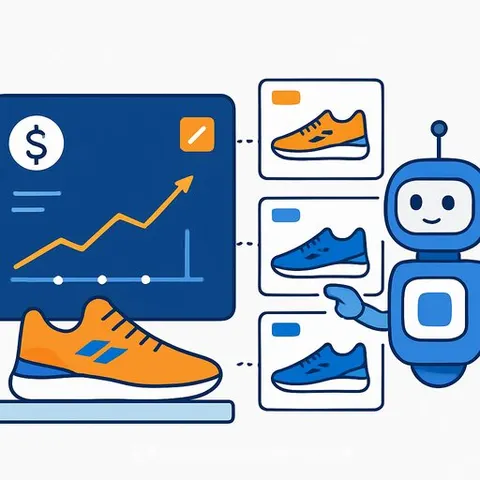
Brooks Running used Adora's AI platform to generate more than 1,500 on-brand ad variations across 40 products, and the results came through on a budget that never grew. The running footwear brand reported a 107% year-over-year increase in return on ad spend and $1.8 million in incremental revenue.
The company also saw cost per acquisition drop 53%. For a brand with ambitious growth goals but no extra budget to fund them, the outcome came down to one fix: creative variety.
Before Adora, Brooks was running campaigns on a single photograph of one shoe in one colorway. That lone asset had to perform across every audience and every channel, leaving the team with almost nothing to test. With so little creative to work with, it was nearly impossible to identify what actually drove performance.
How the ad expansion worked
Brooks turned to Adora, a performance marketing engine built for brand advertisers. The platform generates creative variations that match a brand's existing look and feel. The AI generated ads across the full product catalog, showcasing every colorway from multiple angles and placing shoes in a wide range of settings.
"Adora gave us the ability to test creative at a scale we couldn't achieve manually, while keeping brand standards intact," the Brooks team said in the case study. "The variety let us see what actually resonated with runners."
As campaigns ran, Adora's platform continuously analyzed performance to pinpoint which creative elements drove results. The team tested gym-based backgrounds versus other environments, shoes shown off-foot, and one-shoe versus two-shoe compositions.
The insights fed back into live campaigns in real time. Brooks cut what underperformed and scaled what worked, replacing a one-size-fits-all strategy with a data-driven process.
Creative quality at scale
Adora matched the look and feel of Brooks' in-house work almost one-to-one, so creative quality stayed consistent as volume climbed. That freed the marketing team to focus on higher-value creative and strategic work rather than waiting months for new assets to be produced in the usual workflow.
For AI for Creatives, the Brooks case points to a practical shift: AI-generated creative can now feed real testing cycles with speed that manual workflows simply can't achieve. The campaigns ran at scale, but learnings were constant.
Results on a flat budget
The partnership delivered clear business outcomes without additional media spend:
- 107% increase in ROAS year over year
- 53% reduction in cost per acquisition
- $1.8 million in incremental revenue
- More than 1,500 ad variations across 40 products
For professionals working in generative art and creative production, the shift matters for one concrete reason: creative volume is no longer the bottleneck that keeps campaigns from being optimized. When you can test 1,500 variations instead of one photo, the performance data becomes the creative director. And Brooks' results - 107% higher ROAS on an unchanged budget - might be the benchmark that convinces a skeptical finance team.