
AI news ·
Building Trust in Healthcare AI: Five Essential Insights from the 2025 Future Health Index
Trust is vital for AI adoption in healthcare, with patients valuing transparency and human connection. Healthcare pros seek clear guidelines to ensure AI supports care effectively.
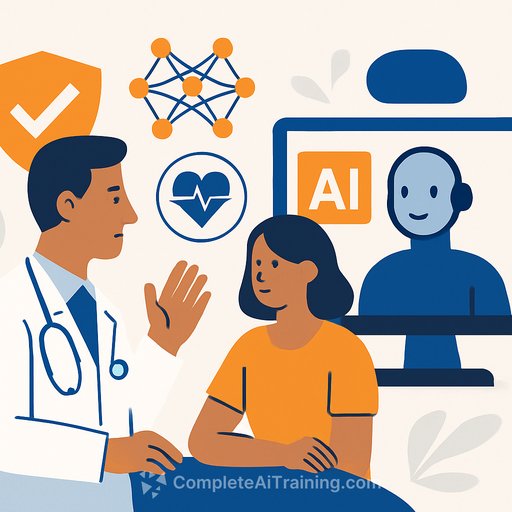
Building trust in healthcare AI: five key insights from the 2025 Future Health Index
May 16, 2025 | 3 minute read
Artificial intelligence (AI) is already helping healthcare providers tackle critical challenges, but its full potential remains out of reach. The key to broader adoption? Trust. The 2025 Future Health Index, the largest global survey of its kind, asked patients and healthcare professionals how they perceive AI and how comfortable they are with its use. Here’s what we found—and why trust and innovation must go hand in hand to realize AI’s benefits in healthcare.
Key Benefits of AI in Healthcare
Healthcare professionals highlight automating administrative tasks, expanding care capacity, and reducing patient waiting times as top benefits of AI. These advantages come at a crucial time, with staff shortages, rising costs, and inefficiencies putting pressure on healthcare systems worldwide.
However, as AI’s role grows, public skepticism is also rising. Despite its benefits, trust in AI is declining due to concerns about safety, reliability, and unintended consequences. In healthcare, where patient well-being is on the line, these concerns are especially important. Our survey shows a clear trust gap: 79% of healthcare professionals believe AI can improve patient outcomes, but only 59% of patients agree.
Patients generally accept AI for administrative tasks like scheduling or check-ins, but their comfort drops when AI moves into clinical decisions. Over half (52%) worry about losing the human touch in care. Healthcare professionals share concerns too, particularly regarding data bias and liability risks. In a field built on human connection, trust in AI must be earned at every stage.
Five Important Clues for Building Trust in Healthcare AI
1. Patients are open to AI if it improves and humanizes care
Patients want AI to operate safely and effectively, improving health outcomes and reducing errors. They are more comfortable with AI when it allows doctors more time for personal interaction, easing fears that technology will make care less human. Done right, AI can make healthcare more personal, not less.
2. As patient awareness of AI grows, so does their demand for reassurance
Patients who know more about AI tend to be more comfortable with it. But with knowledge comes a stronger demand for transparency—patients want to understand how AI is used and how their data is protected. Awareness raises both acceptance and the call for clear information and control.
3. Patients trust healthcare professionals more than any other source on AI
Patients prefer to get information and reassurance about AI from doctors, nurses, and healthcare systems. This matches findings from a 2024 Gallup poll where healthcare professionals remained among the most trusted professions, with nurses ranked highest. Healthcare providers can leverage this trust to guide patients through AI integration and ease concerns.
4. Technology must serve healthcare professionals, not burden them
Healthcare professionals are optimistic about AI’s potential but critical of how digital health technologies fit into daily practice. Although 69% are involved in developing these tools, only 38% feel these tools meet their needs. Closing this gap requires involving healthcare workers throughout development so AI fits smoothly into workflows and IT systems without adding extra burdens.
5. Healthcare professionals call for clear guardrails
Accountability remains a major concern. Who is responsible if AI makes a diagnostic or treatment error? With issues like hallucinations in generative AI affecting accuracy, unclear legal liability hinders adoption. Bias is another worry; professionals fear AI could worsen care disparities due to biased data. They want clear legal guidelines (38%), defined AI use policies (38%), strong evidence of effectiveness (37%), and ongoing monitoring (36%). Job security is less of a concern (23%), indicating AI is seen more as a support than a threat.
The Bottom Line: Trust in Healthcare AI Can Only Be Built in Collaboration
AI is no longer optional—it’s essential to help healthcare systems cope with growing demand. But without trust from patients and professionals, AI’s full benefits won’t be realized. This means AI must support and enhance trusted patient-provider relationships, deliver tangible benefits, operate under clear regulations, and include safeguards.
Accelerating AI innovation in the right direction means bringing effective AI solutions to patients faster while building trust. This requires collaboration across disciplines, institutions, and borders. The insights from this report can help start conversations and actions that lead to meaningful change in healthcare.
For healthcare professionals interested in expanding their knowledge on AI applications, Complete AI Training offers tailored courses that can help build practical skills and confidence in AI tools.