
AI news ·
China's top court issues guidance to crack down on AI deepfakes and doxing
China's top court issued a 24-article judicial opinion requiring lower courts to follow its guidance when ruling on AI-driven civil harms, including deepfakes and voice cloning.
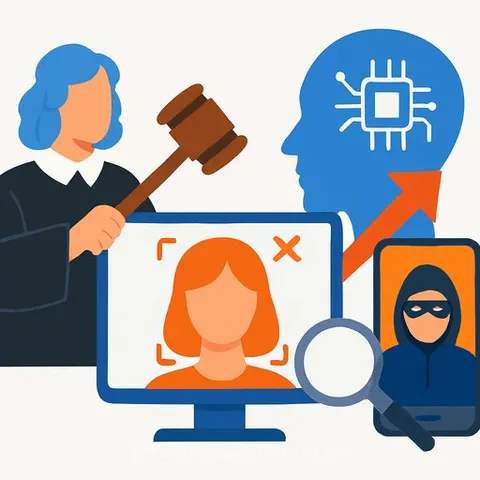
China's Supreme People's Court issued new judicial guidance Monday on how lower courts should handle civil disputes arising from AI tools, including deepfakes, voice cloning, doxing, and algorithmic pricing. The 24-article opinion marks the country's most direct attempt to date to rein in AI-driven harms through the civil court system.
The guidance comes months after a Chinese Intermediate People's Court ruled against a company that used AI to terminate an employee's position. The new opinion from the top judicial body carries significant weight: lower courts in China are required to refer to Supreme People's Court opinions in their own rulings, even though China's civil law system does not follow common-law precedent.
Deepfakes and voice cloning under scrutiny
The opinion directs judges to view disputes involving AI-generated content with an eye toward protecting individual identities, personal traits, and reputations. Deepfakes - lifelike images, video, and audio modeled after real people - have proliferated as generative AI tools became widely accessible, fueling scams, misinformation, and abusive content.
Si Yanli, deputy head of the Supreme People's Court's research office, described the scope of public concern. "In practice, many people express their strong concerns about AI deepfakes. AI face-swapping technology can indiscriminately harvest anyone's likeness, making ordinary people potential targets of deepfakes," Si said. "AI voice cloning technology can also 'steal' voices at a very low cost, with results that can be convincingly realistic."
The court's opinion observes that such technology can be used to "bring the dead back to life," a practice that has raised legal questions about posthumous rights and consent across jurisdictions.
Doxing and financial misconduct addressed
Beyond deepfakes, the guidance covers doxing - obtaining and spreading personal information online - as well as sexualized AI content, financial misconduct, digital privacy, and surveillance pricing. Si described doxing as "a prominent form of cyberbullying, gravely violating victims' privacy, disturbing their daily lives and eroding public security in cyberspace."
The opinion spans multiple areas where AI intersects with civil liability, creating a framework for judges who previously had limited formal direction on how to weigh harms caused by synthetic media and automated systems.
Why this matters for legal professionals
For attorneys and legal teams working on China-related matters, the Supreme People's Court opinion signals how lower courts will likely rule in AI disputes going forward. Practitioners advising clients on AI for Legal issues should review the 24 articles for guidance on liability exposure, particularly around identity rights and data privacy. Paralegals and support staff handling cross-border cases can also benefit from structured training such as the AI Learning Path for Paralegals to understand the technical underpinnings of disputes that now have clearer judicial direction in China.