
AI news ·
Congress' AI Video of PM Modi's Mother Sparks Uproar: What the Law Says
An AI video of PM Modi's late mother ignited a political clash. Prosecutors could test IT Act 66C/66D and BNS defamation, hinging on impersonation, intent, labeling, and harm.
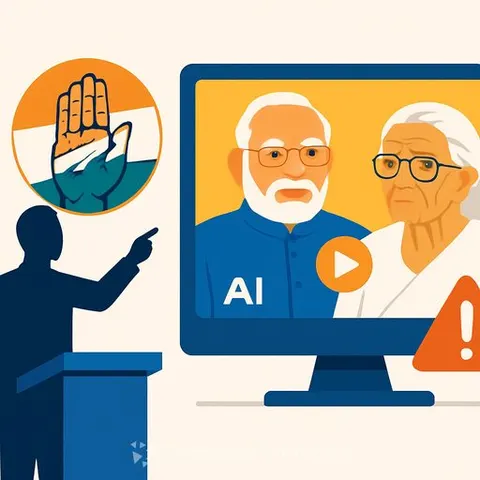
Congress' AI Video Of PM Modi's Mother: Could It Invite Criminal Liability?
An AI-generated video posted by the Congress' Bihar unit depicted the late Heeraben Modi criticizing Prime Minister Narendra Modi. BJP leaders called it "shameful" and promised a nationwide pushback. Congress countered that the clip showed a mother advising her son and was not disrespectful.
Beyond the politics, the legal exposure is real. Cyber law expert Pawan Duggal notes there is no standalone AI statute yet, but creating deepfakes that mislead viewers or harm reputation can trigger existing provisions under the Information Technology Act, 2000 and the Bharatiya Nyaya Sanhita (BNS), 2023.
The Core Legal Hooks Prosecutors May Test
- IT Act, 2000 - Section 66C (Identity Theft): Using another's unique identifiers, persona, or credentials to gain advantage or cause harm. Penalty: up to 3 years' imprisonment and fine.
- IT Act, 2000 - Section 66D (Cheating by Personation via Computer Resource): Deceiving viewers by impersonating someone (here, a deceased public figure) through an AI video to induce belief in false statements. Penalty: up to 3 years' imprisonment and fine; typically bailable.
- Criminal Defamation under BNS, 2023: Publishing imputations that harm reputation can attract criminal liability. Deepfakes that depict fabricated speech can meet the publication and reputational harm thresholds.
- Electronic forgery theories: Prosecutors may frame the deepfake as forgery of an electronic record if it is presented as genuine to mislead the public.
Authoritative references: Information Technology Act, 2000 (text); Bharatiya Nyaya Sanhita, 2023 (overview).
What Will Matter Factually
- Impersonation: Does the video convincingly attribute fabricated speech to Heeraben Modi to mislead viewers?
- Intent and knowledge: Was there an intention to deceive or to cause reputational harm to the PM by using his late mother's likeness?
- Labelling and disclaimers: Was it clearly marked as satire/AI-generated? Absence of clear labelling strengthens personation and deception arguments.
- Distribution and impact: Scale of dissemination, targeting, and foreseeable harm to reputation will influence charging decisions and sentencing.
Possible Defences
- Satire/fair comment: Political speech and satire have protection, especially if reasonable viewers would not treat the content as factual.
- Good faith/lack of mens rea: No intent to deceive or to obtain wrongful gain; disclaimers and contextual cues help.
- Truth and public interest (defamation): If the content makes value judgments based on true facts and is expressed in good faith, it may weaken a defamation charge.
- Prompt takedown and remediation: Swift removal, corrections, and apologies can mitigate risk and sentencing.
Procedure, Evidence, and Platform Exposure
- FIR and cognizability: Police can register an FIR for 66C/66D; these are generally cognizable and bailable. Arrest policy will turn on facts and guidelines.
- Electronic evidence: Secure hashes, server logs, device images, and social media metadata. Use Indian Evidence Act Section 65B certificates; consider expert opinion under Section 45A.
- Intermediary duties: Platforms retain safe harbour if due diligence under the IT Act and Intermediary Rules is followed. Failure to act on valid notices can narrow that protection.
- Blocking/takedown: Authorities can push for takedown; non-compliance after notice raises exposure for continued publication.
Risk Snapshot
Criminal exposure is plausible under Sections 66C/66D and defamation provisions of BNS if the video is framed as genuine speech by the late Heeraben Modi and intended to cause reputational harm. The offences cited carry up to three years' imprisonment and fines; they are typically bailable.
Beyond criminal law, civil defamation claims, injunctive relief, and damages are in play. Courts will weigh political speech interests against deceptive impersonation and reputational injury.
Practical Steps for Counsel
- For complainants: Preserve originals and URLs; capture forensic images and hashes; send notices to the uploader and platforms; seek interim injunctions; file FIR with a detailed Section 65B certificate.
- For the accused/uploader: Preserve source files and edit histories; document disclaimers and context; consider issuing clarifications; cooperate for device imaging; avoid deletion that could imply consciousness of guilt.
- For platforms: Log and act on notices; assess labelling adequacy; apply risk-based demotion/takedown; maintain audit trails to sustain safe harbour.
Bottom Line
There is no standalone "AI law" yet, but India's IT Act and BNS provide enough hooks to prosecute deceptive deepfakes that target reputation. Whether this specific video invites punishment will turn on impersonation, intent, labelling, and the measurable impact on the PM's reputation.