
AI news ·
Don't sacrifice UK arts for AI promises, Lords warn ministers
UK creators warn they're at breaking point as Lords urge ministers: don't trade copyright for vague AI gains. Push for licences, dataset transparency, and real consent by 18 March.
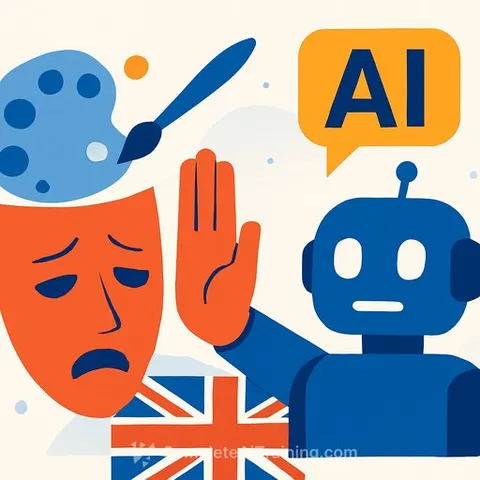
UK arts must not be collateral for speculative AI gains
Protesters gathered in London with banners under the PauseAI UK banner, reflecting a simple truth: creators are reaching a breaking point.
A House of Lords committee has warned that the UK's creative industries should not be sacrificed for uncertain AI benefits. By 18 March, ministers are due to publish an economic impact assessment and an update on proposed copyright changes that could define how your work is treated by AI companies.
What the Lords committee is pushing for
- Scrap any plan that lets AI firms use copyrighted work without permission (even with an opt-out).
- Build a licensing market so tech companies pay for training on creative works.
- Require transparency on training datasets and the sources used.
- Back UK-developed AI models and the businesses behind them.
- Give creators stronger rights-based protection against deepfakes.
Barbara Keeley called the situation a "clear and present danger" to creators, noting the sector contributes £146bn a year. Her message to government: don't weaken copyright just to attract big US tech-don't trade real creative value today for "AI jam tomorrow."
What's on the table right now
Ministers have floated four paths: keep the status quo; force AI companies to get licences; allow use of copyrighted work with an opt-out; or allow use with no opt-out at all. A potential "commercial research" waiver has not been ruled out-creatives fear it could become a back door for broad scraping.
Artists, including Elton John, have pushed back hard on loosening protections. A final direction is expected in the government's update due by 18 March.
Why this matters to you
If AI firms can train on your work without consent, the market shifts against you overnight. Without licensing and transparency, your catalogue becomes free fuel for products that compete with you-and don't pay you.
This isn't anti-tech. It's pro-terms. Creators want clear rules, fair pay, and the right to say no.
What to do now (quick wins)
- Post clear terms on your site: "No text/data mining or AI training without written permission." Add robots.txt and X-Robots-Tag headers (e.g., noai, noimageai) where possible.
- Update client contracts: define "training," ban model training by default, require attribution and usage logs, add indemnities, and set fees for any dataset use.
- Register your work and join relevant collection societies (e.g., ALCS for writers, DACS for visual artists, PRS/PPL for music). Paper trails matter.
- Use provenance tools and watermarks (e.g., C2PA credentials) and share lower-res samples publicly when practical.
- Monitor for misuse: set up reverse image/search alerts; track suspicious lookalike outputs; document everything.
- Enforce your rights: send takedowns, invoice for unlicensed use, and consider the IPEC small claims track for UK disputes.
- Pressure your vendors: ask which datasets trained their tools, what licences they hold, and whether they can exclude your content.
- Get involved: respond to consultations, contact your MP, and align with trade bodies to amplify your position.
What to watch by 18 March
Two things: the government's economic impact assessment and its consultation update. Look for signals on licensing, dataset transparency, and whether any "commercial research" carveout survives.
If a waiver or opt-out model remains, expect more scraping. If licensing and disclosure win, expect new revenue lines and better bargaining power.
If you're advising clients or hiring AI vendors, set these baselines
- Consent: No training on our work without an explicit licence and payment.
- Disclosure: Name the datasets used and the sources of any third-party data.
- Attribution: Credit creators where feasible; provide links to original works.
- Safety: No deepfakes of our likeness/voice without written consent and control.
- Compliance: Vendor indemnifies us against copyright claims tied to their model.
- Controls: Ability to opt out our works now and remove them retroactively if feasible.
Further reading and useful references
- UK Government: Artificial intelligence and IP (policy collection)
- House of Lords Communications and Digital Committee
Practical help
For hands-on workflows, prompts, and protective practices that don't burn your week, start here: AI for Creatives.
The bottom line: say yes to AI on your terms-consent, credit, compensation, and control. Anything less is unpaid R&D for someone else's product.