
AI news ·
Druckenmiller says he used AI to write op-ed criticizing Bessent
Stanley Druckenmiller confirmed he used AI to write his Wall Street Journal op-ed criticizing Treasury Secretary Scott Bessent, saying, "I'm not embarrassed by it." The WSJ defended the piece, arguing the 73-year-old investor's argument and credibility matter more than how the prose was produced.
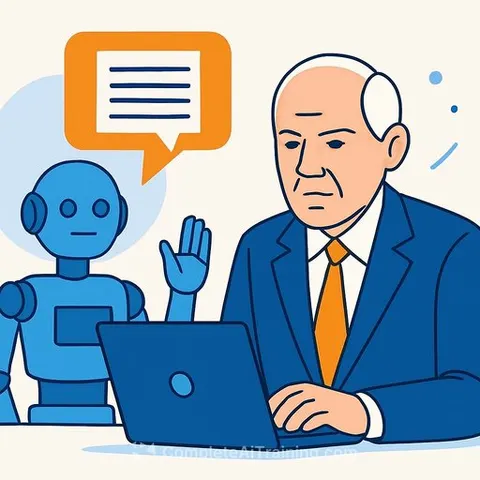
Billionaire investor Stanley Druckenmiller has acknowledged using artificial intelligence to write his Wall Street Journal op-ed criticizing US Treasury Secretary Scott Bessent, a former mentee of his. The admission comes as news organizations and public figures continue to wrestle with the boundaries of AI-assisted writing.
Druckenmiller's editorial, which opposed the Treasury's plan to double the size of its government debt buybacks, drew widespread coverage last week. As the piece circulated online, some readers flagged phrasing that appeared to bear the hallmarks of AI-generated text.
On Tuesday, Druckenmiller confirmed he had used the technology. "I'm not embarrassed by it," he told Notus.
A question of authorship
The Wall Street Journal's editorial page editor, Paul Gigot, defended publishing the piece. "The question for us is whether what we publish from contributors reflects an author's original argument, and if the author has the standing and credibility to make it. In Stan Druckenmiller's case, we have had a relationship with him for many years, and nobody can doubt that his op-ed is his genuine opinion," Gigot said, adding that AI is "a fact of modern life."
Druckenmiller stood by his decision in a separate interview with the Wall Street Journal. "At 73 I'm kind of proud of using it," he said. "These are my ideas and I've been speaking about them for over 15 years, as anyone who knows me knows. Would I prefer that I was a great writer? Yes, but that's not who I am."
The episode highlights a growing tension for executives and public figures who want to publish opinion pieces but lack the time or writing skill to produce them unaided. For media outlets, the question is whether AI assistance undermines the authenticity of a bylined piece - or whether the ideas, not the prose, are what matter.
Media outlets draw their own lines
The Druckenmiller case is not isolated. Earlier this month, a UC Berkeley math professor faced scrutiny for using AI to edit an op-ed in the San Francisco Standard. Zvezdelina Stankova said the piece, which argued that test-blind college admissions have produced under-prepared students, was the result of "intensive human work." The Standard said it understood the piece reflected the "original analysis" of Stankova and her colleagues.
In March, the New York Times severed ties with a freelance journalist after AI use resulted in plagiarism from a Guardian book review. The Times added an editor's note to the review, citing a violation of its standards.
These cases underscore how inconsistent the industry's response has been. Some outlets demand full disclosure of AI use. Others, like the Wall Street Journal in Druckenmiller's case, judge the work on the strength of the author's argument and credibility. For professionals who write under their own names, the risk is that readers - and editors - may not share their comfort with AI-generated prose.
Why this matters for executives and strategists
For executives who publish commentary to shape policy or market perceptions, the Druckenmiller case offers a practical lesson: AI can help you write, but it cannot supply the standing that makes an argument credible. Druckenmiller's op-ed mattered because he is a legendary investor with a 15-year track record of public views on this topic - not because the prose was elegant.
Leaders who use AI for writing should also expect scrutiny. Readers are increasingly skilled at spotting AI-generated text, and outlets are setting their own rules about disclosure. Before publishing AI-assisted work, ask yourself three questions: Is the argument genuinely yours? Does the publication allow AI use? And would you be comfortable defending the choice publicly if asked?
The broader takeaway for those working with Generative AI and LLM tools is that the technology is now mainstream enough that even billionaires use it - but the standards for authorship and accountability have not caught up. For AI for Executives & Strategy, the practical question is not whether to use AI, but how to use it transparently and effectively without eroding trust.