
AI news ·
Elon Musk's company sues Minnesota over new law banning manipulated nudity images
X Corp sued Minnesota over its deepfake nudity law, citing First Amendment violations. The company argues the statute, which carries a $10,000 fine, restricts protected speech.
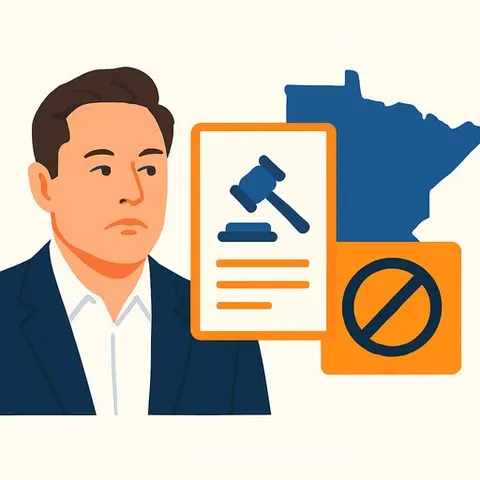
X Corp, the social media platform owned by Elon Musk, filed a federal lawsuit Wednesday challenging Minnesota's new law that makes it a crime to distribute non-consensual deepfake nude images. The company argues the statute, signed by Governor Tim Walz in May, violates the First Amendment by criminalizing protected speech and imposing overly broad content restrictions on platforms.
The Non-Consensual Deepfake Nudity Act prohibits the knowing dissemination of "altered sexual depictions" of an identifiable person without their consent, including content generated by artificial intelligence. Violators face up to five years in prison and $10,000 in fines. The law took effect August 1.
X Corp's constitutional challenge
In the complaint filed in U.S. District Court in Minneapolis, X Corp contends the law sweeps in harmless images and limits editorial discretion. The suit asserts that "the State may not simply ban an entire category of core, constitutionally protected speech" even when motivated by important interests. The company says the statute is not narrowly tailored and could apply to memes, satire, or news content that includes manipulated visuals without an intent to harm.
The lawsuit names Minnesota Attorney General Keith Ellison and a county attorney as defendants. X Corp seeks a declaration that the law is unconstitutional and an injunction blocking its enforcement.
Broader legal debate on deepfake regulation
Minnesota is one of more than a dozen states that have recently enacted laws targeting deepfake pornography. Supporters say such measures fill a gap in existing revenge-porn statutes that often require the use of a victim's actual image. Opponents warn that poorly drafted legislation can chill legitimate expression and burden platforms with unpredictable moderation requirements.
The case lands as tech companies increasingly resist state-level content rules. Earlier this year, NetChoice, an industry group that includes X Corp, successfully blocked similar laws in other states on First Amendment grounds.
Why this matters for legal professionals
This lawsuit tests how far states can go in regulating AI-generated imagery without running afoul of free speech protections. For attorneys working in tech law, privacy, or criminal defense, the outcome will shape the constitutional boundaries around synthetic media and could influence pending federal legislation. It also signals that platforms will aggressively push back against laws they view as prior restraints on distribution, even when the policy goal is widely supported.