
AI news ·
Employers remain liable for discriminatory AI hiring outcomes even when vendors build the tools
Employers are legally liable for discriminatory AI outcomes even when a third-party vendor built the tool. HR teams must audit for proxy bias-like zip code or resume gaps-across all phases of deployment to avoid enforcement risk.
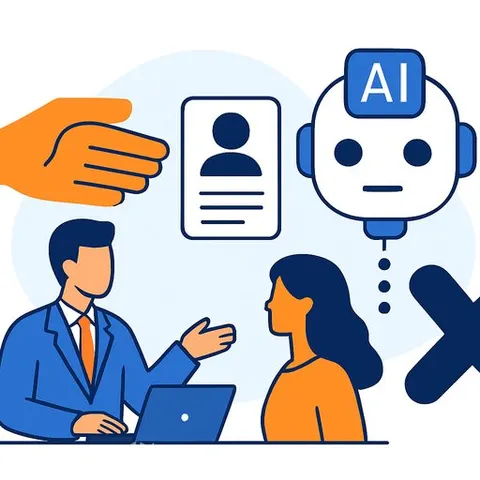
Employers remain legally responsible for discriminatory outcomes produced by artificial intelligence tools, even when a third-party vendor built and operates the system. As AI increasingly shapes hiring, pay, and promotion decisions at scale, HR leaders face mounting legal exposure that cannot be outsourced.
The liability stays with the employer
A common misconception in human resources is that purchasing an AI tool from an external vendor transfers legal risk. That is not the case. Under current frameworks, the employer retains liability for biased outcomes regardless of who coded the algorithm or hosts the software. This means a discriminatory hiring pattern flagged by regulators lands on the company's desk, not the vendor's.
The analysis points to a growing body of enforcement actions where organizations learned this distinction after the fact. HR teams that treat AI compliance as an IT procurement issue rather than an employment law issue are taking on risk they may not fully understand.
The rubber-stamp problem with human oversight
Many organizations point to "human-in-the-loop" reviews as their primary safeguard. The argument goes that a person reviews AI recommendations before final decisions are made. But the analysis warns this review is often superficial - a rubber stamp rather than genuine oversight - especially when the AI has already filtered candidate pools down to a narrow set of options.
Once an algorithm eliminates hundreds of applicants based on patterns a reviewer never sees, the human making the final call operates from a pre-shaped list. The decision feels independent. It is not. This dynamic creates a false sense of security that can mask systemic bias until an audit or lawsuit exposes it.
Proxies that hide discrimination
AI systems do not need to explicitly consider protected characteristics to produce discriminatory results. The analysis flags proxies like zip code and employment gaps as common culprits. A model that penalizes candidates from certain postal codes or those with resume gaps may disproportionately screen out applicants based on race, gender, or disability status - all without ever touching a protected class variable.
These proxy patterns are rarely obvious during a vendor demo or pilot phase. They emerge at scale, across thousands of decisions, and often go undetected without structured auditing before, during, and after deployment.
Auditing as a continuous process
The piece urges HR teams to audit AI tools across three distinct phases: before deployment to establish baseline fairness metrics, during active use to catch drift as models adapt to new data, and after significant decisions to review outcomes for bias patterns. A one-time vendor assessment or a legal review of contract terms does not meet this standard.
For HR leaders building internal capability in this area, structured learning paths like AI for HR Managers Courses and AI HR Strategy Training provide frameworks for evaluating and governing AI tools across the employee lifecycle.
Why this matters for HR and management professionals
Legal liability for AI-driven discrimination sits with the employer, not the vendor. That single fact reshapes how HR leaders must approach procurement, deployment, and ongoing monitoring. The practical takeaway is to treat AI auditing as a compliance function - similar to pay equity analysis or adverse impact testing - rather than a technical checkbox. If your organization cannot demonstrate how it tested for proxy bias in the last round of hiring, it is already behind the enforcement curve.