
AI news ·
Employers reverse AI layoffs as automation fails to replace human expertise
Forrester data shows 55% of employers regret cutting jobs for AI and are rehiring staff. Automation failed to replace human skills, forcing companies to reverse layoffs.
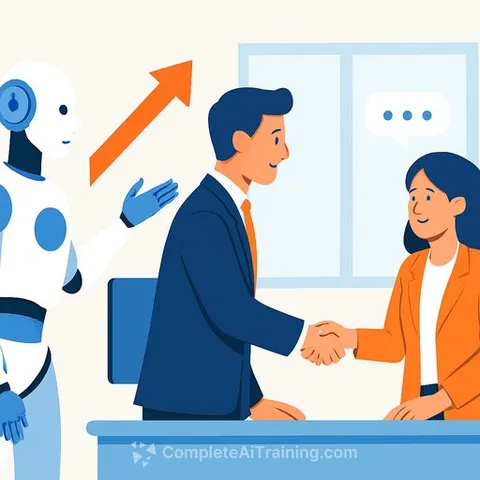
New data from multiple research firms shows a significant number of employers regret cutting jobs because of artificial intelligence, with many already rehiring workers after discovering automation could not replace critical human skills. Forrester's Predictions 2026 report found that 55% of employers who reduced headcount citing AI now regret those decisions, while Gartner predicts half of companies that cut customer service staff due to AI will rehire similar roles by 2027.
Research reveals widespread regret
The findings are not isolated. A February 2026 Careerminds survey of 600 HR professionals found that 35.6% of employers had already rehired more than half of the roles previously eliminated because of AI. Among those rehires, 52% occurred within six months of the original layoffs. Robert Half reported that 32% of US hiring managers who cut roles due to AI later filled the same or similar positions. Orgvue's annual workforce study independently corroborated Forrester's regret figure.
Automation gaps expose the value of institutional knowledge
Ford's experience illustrates the problem. After deploying automated quality control systems and letting veteran engineers leave, the company rehired and promoted more than 350 experienced engineers when quality gaps emerged. A Ford vice president said, "AI is only as good as the information and expertise used to train it." Forrester identified three common mistakes: using industry benchmarks instead of analyzing individual tasks, overlooking work AI could not perform, and treating institutional knowledge as interchangeable with headcount. The rethink shows many employers underestimated the experience embedded in their teams.
Major employers adjust course
Several large organizations have already reversed earlier workforce decisions. IBM Chief Human Resources Officer Nickle LaMoreaux warned that eliminating entry-level hiring could weaken long-term talent pipelines. "There's no pipeline; the well simply dries up," she said. IBM subsequently resumed hiring across software, consulting, infrastructure, and marketing. Booz Allen Hamilton acknowledged falling behind on hiring after customer demand remained stronger than expected. Ford, Alphabet, and CSX also indicated renewed recruitment following earlier automation-linked reductions.
AI's job impact smaller than expected
The research challenges assumptions about AI-driven job displacement. Forrester expects AI to automate about 6% of global jobs by 2030, well below earlier predictions of widespread workforce replacement. Meanwhile, Indeed's job posting index stayed slightly above its pre-pandemic baseline, and US unemployment benefit applications fell to their lowest level since 1969, suggesting labor demand remains strong. Not every employer has reversed course-some tech companies maintain leaner models-but the trend points toward redesigning work around human-AI collaboration rather than replacement.
Why this matters for HR leaders
For HR professionals, the findings signal a shift in workforce planning. Rather than preparing for mass automation, the priority is identifying where human judgment remains essential and building strategies that blend AI with institutional knowledge. Leaders can draw on resources such as AI for Human Resources to understand how AI applications affect talent management, and an AI Learning Path for CHROs to develop strategic approaches for technology adoption without sacrificing critical skills. The data makes clear that cutting headcount without analyzing individual tasks and knowledge often leads to expensive rehiring cycles.