
AI news ·
Essential AI Tools Every Student Should Know for Academic Success
AI tools support students by simplifying tasks like note-taking, coding, and research. They boost accessibility, provide real-time help, and connect learners with mentors for growth.
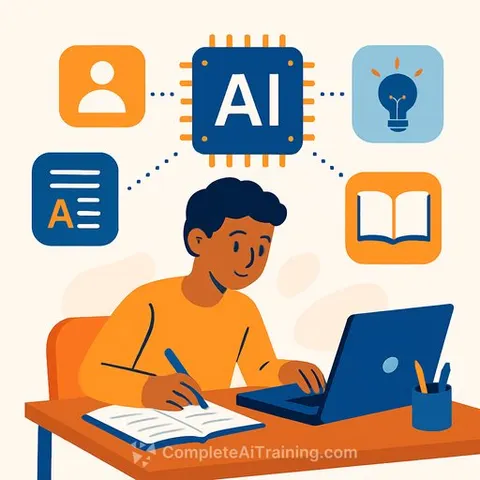
The Impact of AI on Education
Artificial intelligence (AI) is transforming education by offering practical tools that support students and educators alike. From research assistance to personalised feedback, AI simplifies learning processes and opens up new opportunities. Here’s a clear look at five essential AI tools students should consider to boost their academic performance.
Productivity Tools
AI-powered productivity tools help students organise study materials, manage time, and improve communication efficiently. Platforms like Microsoft Copilot, Notion, and Otter.ai aid in note-taking, transcription, and creating structured research documents. These tools summarise important lecture points and convert spoken content into text, making review sessions more effective.
Students with disabilities gain from AI features such as speech-to-text, text-to-speech, and translation services, promoting accessibility and inclusivity. By automating routine tasks, these tools free up time for critical thinking and deeper engagement with the material.
Coding Assistants
For students in STEM fields, especially Computer Science and Engineering, AI coding assistants can improve productivity and learning. GitHub Copilot offers real-time code suggestions and debugging help, while Cursor enables coding through natural language commands and includes autocomplete features.
Codeium supports faster coding by providing intelligent code completion and explanations. These assistants reduce troubleshooting time, letting students focus on solving problems and creating innovative projects.
Multimodal Tools
Multimodal AI tools process and present information through text, audio, video, and images. Google’s Gemini API is a good example, allowing students to interact with AI using voice commands, handwritten equations, and pictures. This approach helps clarify complex subjects like Mathematics and Physics by presenting content in multiple formats.
Tutors and Research Assistants
Many students struggle with challenging topics or managing large research projects. AI tutors like Claude AI provide real-time explanations and summarise academic papers, helping students save time and improve comprehension. These assistants also generate citations and create personalised study plans based on individual learning styles.
Tracking progress and giving tailored feedback, AI research assistants make processing extensive information manageable without compromising depth of understanding.
Mentorship
AI tools can connect students with mentors aligned to their interests and goals. These platforms offer personalised recommendations, monitor mentorship progress, and support structured skill development. Through this, students gain career insights, academic guidance, and build professional networks that ease the transition into the workforce.
Ethical Considerations
While AI enhances learning, it also raises concerns around accuracy, over-reliance, and academic integrity. It’s crucial to use AI as an assistant rather than a substitute. Overdependence on AI-generated content can stunt critical thinking, and improper use may violate academic standards.
Verification of AI-provided information is essential to ensure its accuracy and relevance. Balancing AI tools with human interaction promotes well-rounded academic and personal development. Responsible use will make AI a valuable ally in education.