
AI news ·
European AI Health Care Regulations Fall Short in Addressing Bias and Privacy Concerns, Researchers Warn
Experts warn European AI health care regulations fall short in addressing bias, risking harm to vulnerable groups. Calls grow for stricter validation and transparency in AI systems.
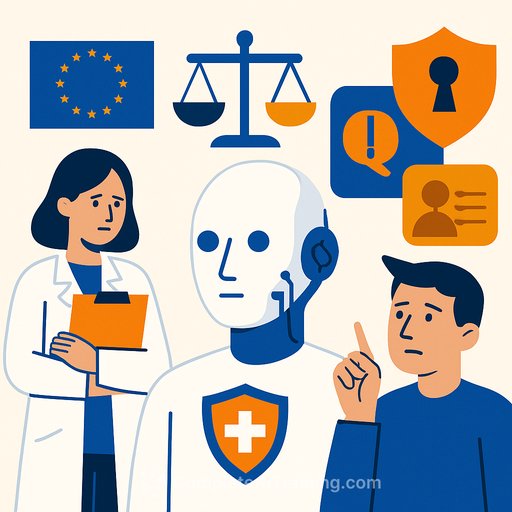
European Controls Fall Short in Tackling Bias in AI Health Care Systems, Experts Warn
Artificial intelligence (AI) is increasingly integrated into health care, supporting tasks from diagnostics to treatment recommendations. While AI has clear potential to improve patient outcomes, it also raises serious concerns—bias being one of the most pressing.
Bias occurs when an AI system produces results that unfairly favor or disadvantage certain groups. For example, an AI trained predominantly on data from fair-skinned individuals may perform poorly on patients with darker skin tones, leading to misdiagnoses or inappropriate treatments.
Why Bias in AI Health Care Is a Serious Problem
Bias affects accuracy and can cause harm by disproportionately impacting vulnerable populations. The issue is compounded by the fact that AI systems evolve over time, meaning bias can emerge or worsen during their lifecycle.
Current European regulations governing medical products were largely developed before AI became widespread. These rules focus on stable, traditional biomedical technologies and may not adequately address the dynamic and complex nature of AI systems in health care.
The Limits of Using More Data
One common strategy to reduce bias is to increase the volume of data used to train AI models. However, simply adding more data is a narrow, technical fix that overlooks broader social implications.
Processing vast amounts of sensitive personal data to address bias carries privacy risks. Moreover, it raises questions about where and how this data is handled and who has the authority to verify that bias is being properly mitigated at every stage—from development to deployment.
Testing AI Systems Beyond Data Volume
Rather than relying solely on data quantity, there's a strong case for incorporating mandatory validation processes throughout an AI system’s lifecycle, including post-market monitoring.
One promising approach is the creation of regulatory testbeds or "sandboxes" where AI health technologies can be evaluated in real-world clinical settings on a small scale—such as within a single hospital—before broader rollout. This mirrors how new drugs undergo phased testing to ensure safety and effectiveness.
Involving Multiple Stakeholders for Safer AI
Evaluation agencies, ethics committees, and even civil society groups should have access to secure environments where they can independently verify AI systems. Such transparency is crucial for ensuring that AI tools do not perpetuate discrimination or cause harm.
Eliminating bias entirely may be unrealistic, but reducing it to minimize impact on fundamental rights is essential. AI should not be discarded due to its challenges; instead, practical policies and safeguards must guide its responsible use in health care.
For health care professionals interested in expanding their knowledge of AI and its ethical use, exploring specialized training can be beneficial. Resources like Complete AI Training's courses for healthcare jobs offer targeted learning on this topic.