
AI news ·
Excedify launches free AI FMEA tool integrated with EXC PLM
Excedify launched a free AI FMEA tool that links risk analysis directly to product structures. The software replaces isolated spreadsheets in its PLM platform.
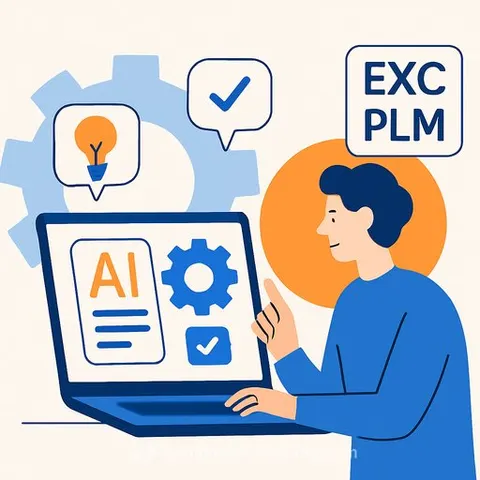
Excedify has released a free AI-powered Failure Mode and Effects Analysis (FMEA) tool, available now as part of its EXC PLM platform. The release, announced July 28, 2025, gives engineering and quality teams a way to create and maintain FMEAs directly linked to product structures, parts, and Bills of Materials, rather than managing risk assessments in isolated spreadsheets.
The tool integrates AI-assisted suggestions to help teams develop functions, failure modes, causes, effects, controls, and risk-reduction actions. The tool's AI-assisted suggestions reflect a broader trend of incorporating AI for Product Development workflows. Users remain responsible for reviewing and approving all content; the AI serves as an engineering assistant, not a replacement for technical judgment.
Risk Analysis Beyond Spreadsheets
"FMEA is one of the most important risk-management methods in engineering, but it is still frequently managed through disconnected spreadsheets," said Yaser Moharam, CEO of Excedify. "Our goal is to make professional FMEA software accessible to every engineer and to connect risk analysis directly with product and PLM data."
Integrated with Product Lifecycle Data
The FMEA tool ties risk analyses directly to product structures, components, and assemblies inside the EXC PLM environment. This integration helps teams:
- Improve traceability between FMEA content and product data
- Reduce duplicated information across engineering systems
- Maintain FMEAs as products and designs evolve
- Support collaboration between engineering, quality, manufacturing, and supplier teams
The move replaces standalone FMEA documents with a connected approach that embeds risk management into the broader product-development process.
Free Access and Lowering Barriers
The FMEA tool is available free at the Excedify tools page. Excedify designed the free release to give students, individual engineers, consultants, startups, and established organizations access to modern FMEA capabilities without the upfront cost of traditional enterprise software. The company also provides professional training in FMEA, GD&T, engineering drawings, APQP, and other disciplines, combining education with practical digital tools.
Why this matters for product development
Product development teams can now integrate risk analysis directly into their PLM workflows, eliminating spreadsheet silos and keeping FMEAs current with product changes. The AI assistance reduces the manual effort of initial FMEA creation, but final decisions remain with engineers. The free access model also makes it easier for smaller teams and startups to adopt structured FMEA processes without a significant financial commitment.