
AI news ·
Family Uses AI to Present Deceased Victim’s Statement in Historic Court Hearing
Arizona used AI to create a digital avatar of a deceased victim delivering a statement in court. This novel approach raised ethical and legal questions about AI’s courtroom role.
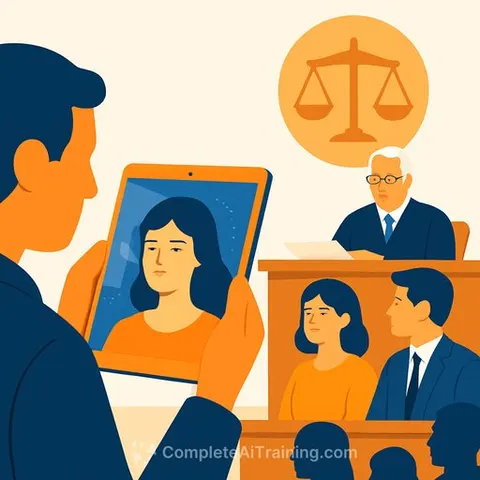
AI Video Used in Court to Deliver Victim Impact Statement for Deceased
In an unprecedented legal event in Arizona, and possibly nationwide, artificial intelligence was used to create a lifelike video of a deceased victim delivering a statement during a sentencing hearing. Christopher Pelkey, 37, who was killed in a 2021 road rage incident in Chandler, was digitally recreated to address the court. His killer was sentenced last week to 10.5 years in prison for manslaughter.
The video, lasting nearly four minutes, showed a digital avatar of Pelkey delivering his impact statement directly to his killer. This marked a novel use of AI technology in the courtroom.
The Role of Victim Impact Statements
Victim impact statements provide the court with insight into the emotional, psychological, and financial effects a crime has on victims and their families. Traditionally, these statements are spoken by surviving family members or read aloud during sentencing to influence the severity of the punishment.
In this case, Pelkey’s family leveraged AI to allow him to "speak" at the hearing. Using a single photograph and audio from a YouTube video where Pelkey discussed PTSD, they created a digital avatar that showed his head and torso, wearing a hoodie and ball cap, facing the camera.
The avatar began with a clear disclaimer: “Just to be clear for everyone seeing this, I am a version of Chris Pelkey recreated through AI that uses my picture and my voice profile.” The script, written by Pelkey’s sister, reflected his forgiving nature. The avatar said, “It is a shame we encountered each other that day in those circumstances. In another life, we probably could have been friends. I believe in forgiveness and in God, who forgives. I always have and I still do.”
AI’s Growing Influence in the Legal Sector
AI technology is increasingly integrated into legal practice, though not without challenges. There have been incidents where lawyers cited fabricated case law generated by AI in legal briefs, raising concerns about accuracy and reliability. For example, the prominent law firm Morgan & Morgan recently cautioned its attorneys after one lawyer included AI-generated, non-existent case citations.
Another case involved a man representing himself in a New York appeals court who tried to use an AI-generated video avatar to argue his case without informing the judges. The court rejected the avatar, citing concerns about misleading the panel.
Meanwhile, the Arizona Supreme Court began using AI-generated spokespeople in March to deliver brief court news updates. This development highlights a cautious acceptance of AI tools by court staff, although its role in sentencing remains new territory.
Legal and Ethical Considerations
The use of AI to deliver victim impact statements is a novel and sensitive application. Cynthia Godsoe, a Brooklyn Law School professor and former public defender, expressed concerns about emotional manipulation and the potential for altered or misleading content. She warned courts to approach such uses carefully, describing it as a “slippery slope.”
Conversely, some experts like Maura Grossman from the University of Waterloo see fewer legal or ethical issues in this specific case. Because the video was presented before a judge, not a jury, and was not submitted as formal evidence, its influence was more limited.
This development opens new questions about AI's role in courtroom communication and sentencing, emphasizing the need for clear guidelines and cautious application.
For legal professionals interested in how AI tools are shaping court proceedings and legal workflows, staying informed through reliable sources and training is key. Explore relevant AI courses and certifications at Complete AI Training.