
AI news ·
Filipino artists protest Pax Silica over land, labor and AI concerns
Filipino artists launched a protest against the 1,600-hectare Pax Silica industrial hub, citing land rights and unauthorized use of their work to train generative AI.
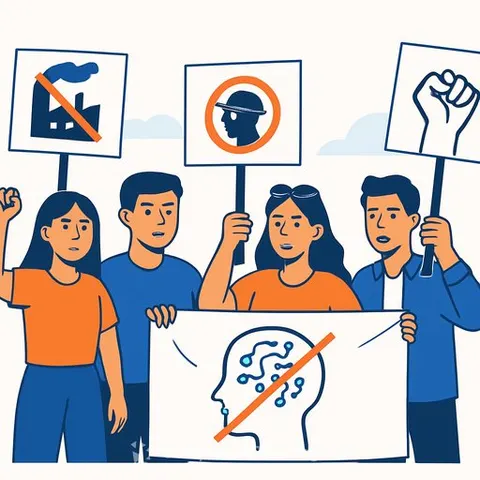
A network of Filipino artists launched a protest campaign Sunday against the proposed Pax Silica development, citing concerns over land rights, resource extraction, and the unauthorized use of creative work to train generative AI systems. The group, Artists Unite Against Pax Silica (AUPAX), opened the exhibit "ALL CAPS: Art, Land & Labor - Creatives Against Pax Silica" at Sampaguita Projects Gallery in Quezon City, bringing together visual artists, designers, writers, and photographers.
Pax Silica is a US-led initiative focused on securing supply chains for artificial intelligence, semiconductors, and critical minerals. Its Philippine plans include an industrial hub spanning roughly 1,600 hectares in New Clark City, Tarlac. The Philippine government has promoted the hub as a way to attract technology investment and generate higher-value jobs in the global AI supply chain.
Land, labor, and indigenous rights
AUPAX co-convener Kart Mabato said the group is concerned the project could increase pressure on Philippine land and mineral resources, particularly in areas involving indigenous and local communities. The exhibit grew out of an online art protest and includes talks, discussions on the national and agricultural situation, and screen-printing workshops. Organizers said the campaign aims to use art to make discussions surrounding Pax Silica more accessible to the public.
Generative AI and creative consent
Artists involved in the campaign are also raising direct concerns about generative art and its implications for working creatives. Mabato said many in the community worry about artworks being collected or used to train generative AI systems without the creators' consent, citing unresolved questions around copyright and intellectual property rights.
Multidisciplinary artist Jay Turing reflected those concerns in a mixed-media piece inspired by silica gel packaging. The work uses the material as a metaphor for what the group sees as the extraction of Philippine resources. "ALL CAPS: Art, Land & Labor - Creatives Against Pax Silica" runs through September 11.
Why this matters for creatives
The protest connects two pressures that many working artists now face simultaneously: the physical displacement of communities through large-scale industrial projects, and the digital displacement of creative labor through AI training practices. For professionals in visual arts, design, and illustration, the core question raised by AUPAX is whether their work can be scraped and used to build systems that compete with them - without permission or compensation. As generative tools become more embedded in commercial workflows, the legal and ethical frameworks around consent remain unsettled, making organized responses like this one a signal worth watching. For more on how AI intersects with creative professions, see resources on AI for Creatives.