
AI news ·
Film studios shift AI from production support to central creative role
Film studios now use AI for storyboards, scene construction, dubbing, and VFX-not just cleanup. JioStar's AI Mahabharat has drawn millions of views, showing real audience demand for the output.
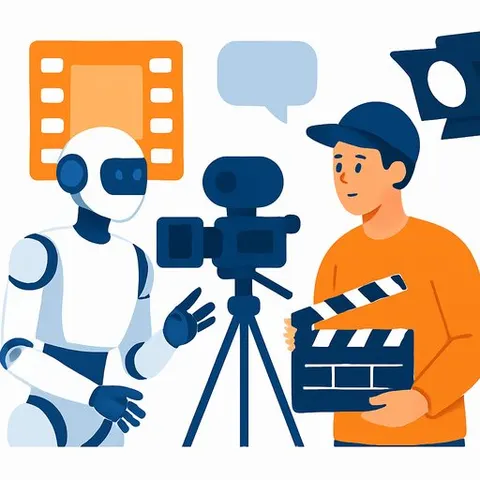
Film Studios and Creators Turn to AI for Core Production Work
Generative AI has moved beyond post-production cleanup into central creative roles across film production. Studios and independent creators now use AI systems to build storyboards, construct entire scenes, generate virtual worlds, and handle dubbing and visual effects work.
JioStar's AI Mahabharat has drawn millions of views, signaling audience appetite for AI-assisted content at scale.
How Production Workflows Are Shifting
Generative models reduce the cost of iterating on visual and audio assets. Teams can now prototype treatments and scenes faster than traditional methods allow, compressing pre-production timelines.
The technical demands are changing. Production tooling teams now prioritize controllable generation-maintaining consistent style, continuity, and temporal coherence across shots. Integration with existing VFX pipelines has become essential rather than optional.
What This Means for Your Work
If you're building or using production software, provenance and rights tracking are becoming operational requirements as synthetic content scales. You'll need systems that track dataset sources, maintain editorial overrides, and version assets reliably.
For creators, the shift means lower barriers to prototyping complex scenes. Access to generative video tools expands who can experiment with narrative ideas without massive budgets. Quality control and rights clarity remain active concerns as adoption accelerates.
Studios are watching three areas closely: published viewership metrics for AI-generated content, open-source toolchains that handle production-grade continuity, and evolving licensing frameworks from platforms. How vendors address versioning, editorial control, and dataset provenance at scale will shape which tools become industry standard.
The practical implications are immediate. Teams integrating these systems need end-to-end pipelines combining model inference, editorial controls, and asset metadata management. This is an operational shift, not a frontier breakthrough-but it changes where technical effort lands in production.