
AI news ·
French AI Startup Partners with China to Tackle Stroke Crisis with Early Detection Technology
AI-Stroke uses AI to detect strokes within minutes, focusing on China’s high stroke rates through collaboration with local hospitals. This partnership improves diagnosis accuracy and emergency response.
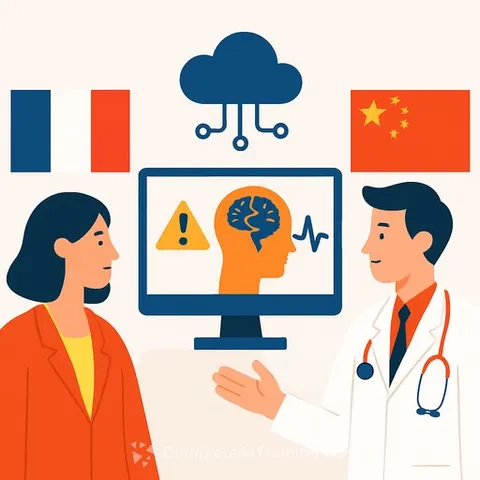
AI-Stroke: Advancing Early Stroke Detection Through France-China Collaboration
AI-Stroke, a French health-tech startup founded in 2023, is focusing on one of the most urgent medical challenges: timely stroke detection. The company uses artificial intelligence to diagnose strokes within minutes, targeting the critical window before patients reach hospitals. Recognizing China as a vital partner, AI-Stroke is deepening cooperation with Chinese medical institutions, researchers, and investors.
Why China Matters in Stroke Detection
China has the highest number of stroke cases worldwide, with 3 million new incidents annually and over 17 million survivors. Stroke remains the leading cause of death and disability in the country, placing immense pressure on its healthcare system. For AI-Stroke, this makes China a priority market for both volume and urgency in deploying its AI-driven solutions.
The company’s technology digitizes the FAST protocol (Face, Arm, Speech, Time), using computer vision and voice analysis to detect symptoms like facial paralysis, arm weakness, and speech difficulty. The AI can deliver a preliminary diagnosis in under two minutes via a mobile app or camera, enabling faster emergency response and treatment.
Bridging East and West
Simon Li, AI-Stroke’s chief business officer, brings a unique perspective with his background spanning China, France, and the United States. He leads the company's global business development and bridges cultural and regulatory gaps between markets.
“Stroke is the number one health issue for Chinese citizens, especially with an aging population,” Li explains. “Our goal is to ensure the technology performs equally well for Chinese users by collaborating closely with local neurologists and adapting our AI using Chinese patient data.”
Local Collaboration and Data Adaptation
Currently, AI-Stroke's AI models have been trained predominantly on European data. The startup is working alongside top Chinese hospitals such as Tiantan Hospital in Beijing and Fudan University in Shanghai to build a localized database. This will improve diagnostic accuracy for Chinese demographics and support clinical validation.
The collaboration extends beyond data collection. AI-Stroke aims to involve Chinese AI engineers and secure investment from local healthcare investors. This multi-faceted partnership supports sustainable growth and practical deployment within China’s unique healthcare landscape.
Commercial and Clinical Applications
- Emergency Response: Integration of the AI app into ambulance systems can help identify strokes that currently go unrecognized during emergency transport.
- Home Monitoring: The app can assist stroke survivors in early detection of recurrence, which affects about 13% within the first year after the initial stroke.
China’s Healthy China 2030 Initiative prioritizes stroke prevention and faster diagnosis. The government supports efforts to reduce misdiagnosis, accelerate triage, and improve access to care, especially in rural areas. This policy environment provides a favorable context for AI-Stroke’s expansion.
Global AI Collaboration for Better Outcomes
Simon Li stresses the importance of international cooperation in AI development. “AI depends on diverse data. Training on one demographic limits effectiveness,” he says. “We want AI tools that work across languages, ethnicities, and healthcare systems.”
For healthcare professionals, AI-Stroke’s approach highlights the value of combining AI innovation with local clinical expertise and data to improve stroke outcomes. This collaboration aligns with broader efforts to integrate AI into healthcare delivery effectively and equitably.
To learn more about AI applications in healthcare and training opportunities, visit Complete AI Training.