
AI news ·
From Chaos to Clarity: How AI is Streamlining Legal Workflows Inside Everyday Tools
AI is streamlining legal work by automating low-value tasks and integrating smoothly into existing workflows. Lawyers now spend less time on admin and more on delivering quality client service.
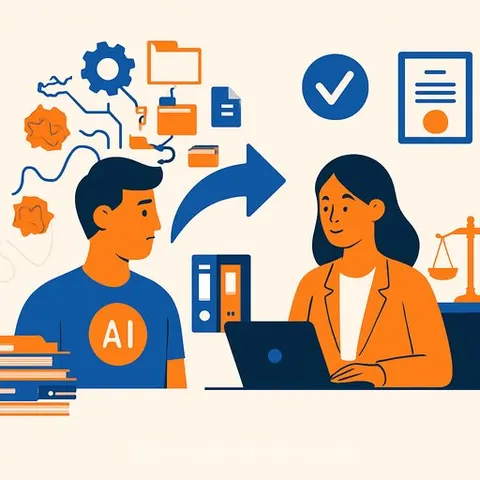
From Friction To Flow: How AI Is Reshaping Legal Work
AI has moved beyond being just a buzzword—it's now essential for law firms aiming to stay competitive. The real value of AI lies in solving specific challenges and delivering clear benefits to clients and legal teams alike. Without practical use cases, even the most advanced AI tools don’t make an impact. What’s different now is the momentum: legal professionals are actively engaging with technology, realizing that ignoring AI is no longer an option if they want to keep pace.
Why Is Technology Adoption Critical—and Where Does It Help Most?
Lawyers didn’t train to spend hours switching between tabs and hunting for files. Yet, many find themselves buried under administrative tasks—searching for documents, jumping between contracts, emails, and research platforms. The problem isn’t a lack of resources but fragmentation. There’s no unified source of truth. Add formatting issues, compliance checks, and document reviews, and legal teams become bottlenecks.
For in-house departments, slow deal cycles result. For law firms, billable hours get eaten up by low-value work just as pressure mounts to deliver more, faster. Legal work is complex, but the process doesn’t have to be. Here’s where improvements are most urgent:
- Fragmented Tools Are Slowing Lawyers Down
Lawyers struggle with multiple disconnected tools that don’t fit their workflows. Ethan Hilton, CEO of Caseflood.ai, notes, “Good, well-thought-out integrations are the lubricant to having AI get adopted.” Aravinda Seshadri, Founding Partner at Venturous Counsel, adds, “Especially for smaller firms, tracking new tools is a part-time job that often gets neglected when things get busy.” - Repetitive, Low-Value Tasks Drain Legal Time
Mundane tasks like formatting, clause hunting, and redlining still consume too much lawyer time. Nako Edisherashvili, CEO of Lawformer, says, “Legal tech isn’t just about efficiency—it’s about making work less tedious and more focused.” Lawformer automates drafting, review, and formatting so lawyers can focus on what truly matters. - AI Tools Fail Without Practical Integration and Training
Many legal teams hesitate to adopt AI due to perceived complexity or poor integration. Hilton observes, “Many attorneys try AI once then abandon it.” Seshadri points out, “Tools that don’t address real pain points, or that overlook security and confidentiality, stall adoption.” Edisherashvili highlights that embedding AI directly into familiar platforms like Microsoft Word lowers barriers and encourages use.
Legal Tech’s Tipping Point
The surge in legal tech adoption benefits everyone. In-house teams can keep up with business demands. Law firms streamline workflows, reduce inefficiencies, and explore fixed pricing. Clients gain better access to legal services with automation and lowered costs.
AI is taking over tasks that once required manual labor—document review, billing, formatting, research—freeing legal professionals to focus on their expertise. The legal sector remains one of the most manual industries, making it ripe for AI-driven change, but also demanding higher standards for commercial viability.
Traditional billable-hour firms had limited incentive to adopt tech that cuts costs. Now generative AI shifts the equation by replacing routine legal labor, creating strong market demand.
Real Solutions Are Emerging
Legal tech must fit into existing workflows, not force new systems on lawyers. That’s why Lawformer integrates directly with Microsoft Word. No tab switching or document importing—just smarter tools inside platforms lawyers already know.
Legal departments spend years building clause banks and precedent libraries, yet these often remain static. Lawformer makes them actionable, turning contracts into searchable, editable, and enforceable AI-enhanced documents. Risk flags, internal policies, and company standards apply in real time.
Built by lawyers frustrated with inefficient systems and backed by product leaders from Microsoft, Pipedrive, and IBA, Lawformer has demonstrated strong product-market fit. Givi Chkhartishvili, Head of Growth at Tether and founder of Noxtton, calls it “one of the most exciting legaltech ventures” he’s supported.
Ethan Hilton predicts 2025 will be the year of Voice AI in legal. For consumer-facing firms like personal injury or criminal defense, most inbound calls are non-viable cases, but the valuable leads need prompt attention. Caseflood offers an AI-powered intake team combining voice AI with intake experience, boosting revenue by 20–30% and cutting costs. Voice intake is complex but highly valuable, and adoption is growing.
Aravinda Seshadri emphasizes the importance of adopting tools that reduce costs and improve quality while protecting confidentiality. Firms resistant to tech risk being outpaced.
Final Thoughts
Legal work today demands more than expertise—it requires working smarter and delivering faster, flexible client service. AI use among legal professionals jumped from 19% in 2023 to 79% in 2024. This shift is real and accelerating.
AI tools are becoming embedded in legal workflows, gaining the trust of professionals and clients. The next wave of legal tech won’t ask lawyers to change how they work. Instead, it will improve the tools so they work better for lawyers—enabling better work done faster, right where it already happens.