
AI news ·
Government pilots AI probation check-ins to stop crimes before they happen
The government pilots AI video check-ins with facial recognition to tighten supervision and cut reoffending. Suspicious answers trigger instant alerts to probation.
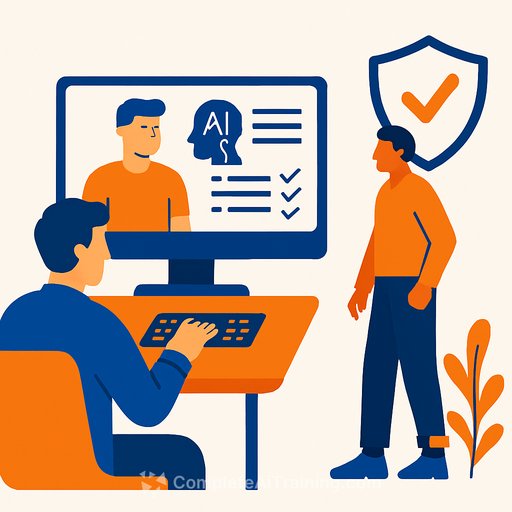
Government pilots AI check-ins to prevent reoffending
The government is testing an AI-enabled system to intervene before crimes happen. The pilot adds remote video check-ins to current measures like GPS tags and in-person probation appointments. It's built to tighten supervision, speed up responses, and reduce reoffending.
How the pilot works
Offenders use their own mobile devices to complete scheduled video check-ins. The system verifies identity via facial recognition and asks brief questions about recent activities and behaviour. Any suspicious answers or attempts to spoof ID trigger an instant red alert to the Probation Service for immediate follow-up.
Where it's running and what's next
The pilot is live across four regions: the South West, North West, East of England, and Kent, Surrey and Sussex. If successful, it could scale nationally with added features such as GPS location verification. The initiative is part of an £8 million Ministry of Justice programme linked to its AI Action Plan and broader street safety goals.
Minister's view
Lord James Timpson, minister for prisons, probation and reducing reoffending, said: "This new pilot keeps the watchful eye of our probation officers on these offenders wherever they are, helping catapult our analogue justice system into a new digital age. It's bold ideas like this that are helping us tackle the challenges we face. We are protecting the public, supporting our staff, and making our streets safer as part of our Plan for Change."
What this means for government teams
Operational impact: Expect more frequent, lighter-touch contact with offenders between appointments, faster escalation when risk indicators appear, and tighter compliance reporting. Frontline staff will need clear protocols for responding to red alerts and for documenting interventions.
Data, privacy, and fairness: Facial recognition and behavioural data raise clear obligations for lawful basis, purpose limitation, retention, DPIAs, and bias monitoring. Build in independent testing, audit trails, and a process to handle false positives and appeals.
Immediate actions to line up
- Define eligibility and exclusion criteria (e.g., offence type, risk level, device access).
- Set escalation pathways for red alerts, including out-of-hours coverage.
- Update contact standards to reflect hybrid supervision (video, GPS, in-person).
- Run a DPIA and equality impact assessment; document decisions and mitigations.
- Establish accuracy, spoofing resistance, and bias tests for the facial recognition module.
- Clarify data retention, access controls, and supplier responsibilities in contracts.
- Train probation staff on interpreting AI outputs and avoiding automation bias.
- Create a contingency plan for device loss, connectivity issues, and non-compliance.
Measures to track from day one
- Check-in completion rates and time-to-intervention after red alerts.
- False positive/negative rates for identity and behaviour flags.
- Reoffending and breach rates vs. matched cohorts on standard supervision.
- Officer workload, caseload pressure, and contact quality outcomes.
- Service accessibility (digital inclusion) and user complaints/appeals.
Technology horizon
Officials are exploring add-ons including AI-powered home monitoring and "synthetic brain cells" that mimic the human nose to detect illegal drugs. Any expansion should be gated by clear evidence on accuracy, proportionality, and legal compliance.
Governance checkpoints
Before scaling, secure independent assurance on system performance and equity, publish a summary DPIA, and engage with local stakeholders. Align with biometrics guidance and surveillance principles, and provide a transparent route for redress if the system gets it wrong.
ICO guidance on biometric data
Government policy on GPS tagging
Upskilling your team
If your unit is preparing to deploy or oversee AI tools, curate role-specific training to raise technical literacy, governance fluency, and procurement competence. A practical starting point: AI courses by job role.