
AI news ·
Hiring managers prize AI judgment while job seekers chase technical skills, Adobe survey finds
Hiring managers and job seekers disagree on which AI skills matter, per Adobe survey data. Managers are 175% more likely to prioritize ethical AI oversight, while candidates focus on technical skills like AI image generation.
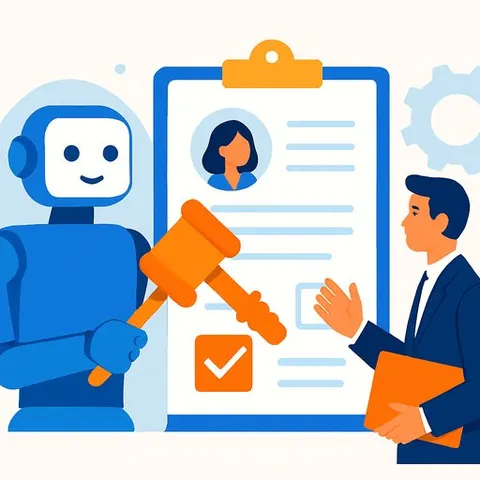
Canadian HR professionals and job seekers are not aligned on which AI skills actually matter for hiring, according to new survey data from Adobe. Hiring managers prioritize judgment-based oversight of AI outputs, while job seekers are spending their time building visible technical and creative skills instead.
The findings, based on a survey of 805 job seekers and 406 hiring professionals, show hiring managers are 175% more likely than job seekers to prioritize "ethical AI oversight" as a critical skill. The gap suggests candidates may be preparing for a different job market than the one employers are actually hiring for.
Soft skills versus hard skills
The top soft skills hiring managers now prioritize are time management (47%), adaptive problem-solving (44%), collaboration (41%), ethical AI oversight (33%), and creative intuition (28%). Job seekers, by contrast, believe the following hard skills will boost their hireability this year: brainstorming with AI (30%), AI image generation (19%), and workflow automation (19%).
Only 45% of job seekers report confidence in their own prompting abilities, according to Adobe, even as AI tool adoption rises across industries. Director-level professionals are 106% more likely than entry-level candidates to list AI image generation as a core skill.
The stakes are real for HR teams. One in three Canadian workers admit to faking their AI abilities at work, according to a previous study. That gap between claimed and actual competence makes judgment-focused screening more valuable - and harder to assess.
Interview red flags centre on judgment
Adobe's report identifies "lack of fact-checking" as the most common red flag among hiring managers, cited by 70% of respondents, followed by "blind compliance" with AI outputs at 54%. "AI-generated outputs should be treated as a starting point," Adobe states in the report, adding that candidates are expected to "verify data and sources manually" before presenting AI-assisted work.
"The strongest candidates are the ones who know when to challenge an output," according to the report. Being able to explain how a flawed AI response was improved demonstrates critical thinking rather than blind reliance on the technology.
Despite the emphasis on oversight, nearly two in three hiring managers (63%) told Adobe they would still hire a candidate who lacks basic AI proficiency. The bar for entry-level competence remains more forgiving than some employers might assume.
"Knowing when not to use AI is just as important as knowing how to use it," reflecting hiring managers' growing attention to over-automation as an interview red flag, cited by 40% of respondents, according to the report.
Organizational support lags behind
Adobe found that while 91% of hiring managers say their organizations support AI skill development, only about one in three tech-sector organizations has a formal system for sharing AI knowledge among staff. That disconnect means employees are expected to develop AI judgment without structured support.
For HR teams building hiring criteria, the data points to a practical shift: evaluate how candidates question AI outputs, not just whether they can produce them. That aligns with broader guidance for AI for Human Resources work - the focus is moving from tool proficiency to oversight and accountability.
Human oversight thresholds - which decisions always require a person - should be part of any organization's AI governance policies, one expert previously told HRD. "Governance provides velocity, not friction. Companies that build real oversight into their AI adoption move faster and with less risk than those improvising, because they are not constantly managing unforeseen failures," Himanshu Joshi, founder of Cohumain Labs, said in an email.
Why this matters for HR professionals
HR teams should update their interview rubrics to test judgment about AI outputs - fact-checking, challenging flawed results, and knowing when to skip AI altogether - rather than asking candidates to demonstrate flashy generative skills. The survey data suggests most candidates won't arrive with those oversight skills already developed, so structured training may be the faster path. For HR managers building those capabilities on their own teams, an AI Learning Path for HR Managers can provide a practical starting point for recruitment and workforce analytics.