
AI news ·
House Republicans Push 10-Year Ban on State-Level AI Laws, Sparking National Debate
House Republicans propose a 10-year ban on state AI laws, blocking new regulations to create a unified federal framework. Forty state attorneys general oppose, urging complementary state-federal rules.
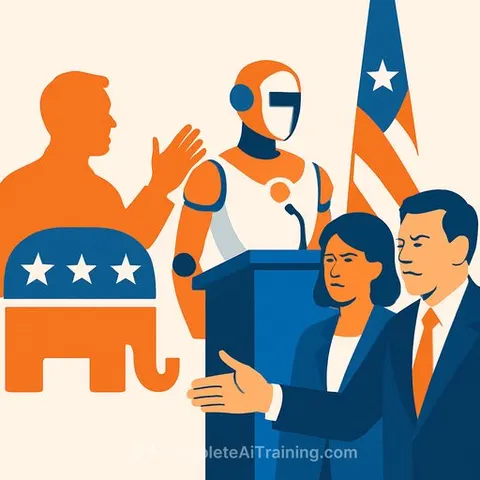
U.S. House Republicans Propose 10-Year Ban on State AI Laws
House Republicans in the U.S. are pushing for a 10-year moratorium on state-level artificial intelligence (AI) laws. This initiative appears as a footnote in a budget bill aimed to pass before Memorial Day and signals the likely direction of federal AI policy. The proposal would prohibit states from enforcing or enacting any laws regulating AI models, automated decision-making systems, or related technologies for the next decade.
Exceptions to the moratorium would allow laws that remove barriers or facilitate AI deployment. California Representative Jay Obernolte, a Republican on the Subcommittee on Communications and Technology, emphasized that AI regulation is necessary but should be handled by Congress rather than individual states.
Moratorium Linked to Federal IT Modernization Funding
The AI law ban is bundled with a budget proposal allocating $500 million to modernize federal IT systems using commercial AI through 2035. This aligns with efforts by some lawmakers to create a federal framework that overrides state regulations, aiming to reduce the patchwork of AI laws across the country.
Travis Hall, Director for State Engagement at the Center for Democracy and Technology, notes that these moves reflect long-standing desires among some legislators to preempt state AI legislation. Senator Ted Cruz has also expressed plans to establish a "regulatory sandbox" for AI, preventing excessive state-level oversight and encouraging U.S. AI industry growth.
Federal vs. State Roles in AI Governance
Currently, states have been active in developing AI-related laws, particularly addressing data privacy, transparency, discrimination, and the use of AI in sensitive areas like elections and for children. In 2025 alone, more than 550 AI bills have been introduced across 45 states and Puerto Rico, according to the National Conference of State Legislatures.
- State laws often focus on fairness and accountability in automated decision-making systems.
- Some states regulate deepfakes and AI's impact on elections.
- Others address AI’s interaction with children's access and protections.
Without federal leadership, states have filled the regulatory gap. However, the moratorium would invalidate existing state laws and block new ones, including California’s Automated Decisions Safety Act and Colorado’s upcoming AI regulations.
Opposition from State Attorneys General and Legislators
On Friday, 40 state attorneys general signed a bipartisan letter opposing the moratorium. They urged Congress to develop a federal AI framework that complements, rather than replaces, state laws, particularly for “high risk” AI systems. The letter emphasized that existing state laws were crafted with input from multiple stakeholders and serve important consumer protections.
According to the attorneys general, the moratorium would deprive consumers of rights and hinder states’ ability to protect them from AI-related harms.
State legislators also express concern. Colorado Representative Brianna Titone called a 10-year ban “astronomical” given the pace of AI development, warning that a lack of regulation could expose citizens to unforeseen risks.
Challenges and Outlook
Experts like Travis Hall are skeptical that the moratorium will pass as part of a budget bill focused on IT modernization. The provision’s inclusion suggests a preference among some lawmakers for deregulation over accountability.
Assemblymember Rebecca Bauer-Kahan of California, a sponsor of AI safety legislation, supports a federal approach but recognizes that inaction by Congress has pushed states to act independently.
As AI technologies evolve rapidly, the debate over federal versus state authority remains central. Legal professionals should monitor these developments closely to understand the shifting regulatory landscape and advise clients accordingly.
For legal professionals seeking to deepen their understanding of AI and its implications, exploring targeted courses can provide valuable insights and practical skills. Consider visiting Complete AI Training’s courses by job for relevant educational resources.