
AI news ·
How AI is Transforming Mental Health Care for Children: Smarter, Faster, and Fairer Solutions
AI can improve mental health care for children by identifying brain-based subtypes and predicting outcomes more accurately. This approach aims for faster, fairer, and more precise support for all kids.
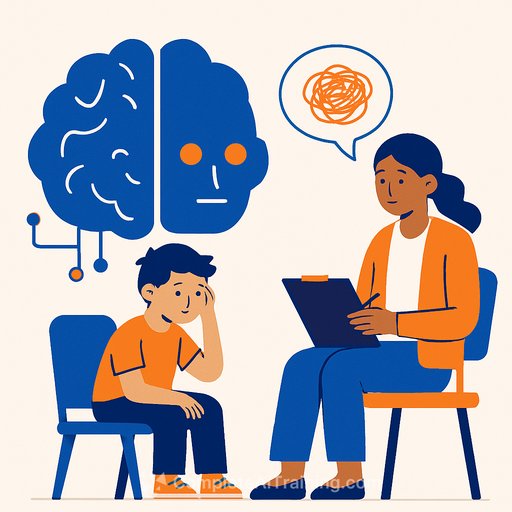
Can AI Make Mental Health Care Smarter, Faster, and Fairer for Children?
The path to effective mental health support for children is often slow and uncertain. Despite many available interventions, clinicians frequently face a trial-and-error process to find what works best for each child. This approach can be lengthy and overwhelming for families. Artificial intelligence (AI) offers promising ways to improve this process by providing more precise and inclusive mental health care.
Research at the intersection of mental health, AI, neuroimaging, and genomics explores whether objective biological data can enhance diagnosis and treatment beyond observable behaviors. The goal is to create solutions that benefit all children, including those from diverse backgrounds.
From Symptoms to Biology
Current mental health assessments largely focus on symptoms—what the child reports, observable behaviors, and third-party descriptions. While valuable, this approach misses significant biological differences among children with the same diagnosis. For example, attention-deficit/hyperactivity disorder (ADHD) and obsessive-compulsive disorder (OCD) show wide variability that clinical observation alone cannot capture.
AI techniques like machine learning help identify brain-based subtypes, often called “biotypes,” by analyzing large datasets. These biotypes reveal distinct patterns in brain function invisible through traditional clinical methods. Importantly, different biotypes may respond better to specific treatments. One identified subtype involving attention-related brain circuits tends to respond well to stimulant medications, while others may benefit more from non-stimulant drugs or behavioral therapies. This biological insight can lead to faster recovery, fewer side effects, and reduced family stress.
Predicting What Comes Next
Families often ask about the future trajectory of their child’s condition, but predicting outcomes has been challenging. Even thorough clinical assessments struggle to forecast whether symptoms of disorders like ADHD will persist or improve during adolescence.
Combining genetic and brain imaging data with machine learning models has improved prediction accuracy significantly. Studies show over 80% accuracy in forecasting whether children with ADHD will continue to meet diagnostic criteria later or if symptoms will subside. This information helps clinicians and families make better-informed decisions about interventions and support. The next step is to validate these predictive tools across different clinical settings.
Mind the Gap
AI’s potential comes with the risk of reinforcing existing healthcare disparities if models are trained on limited or biased data. Children from underrepresented groups or those with severe symptoms who cannot complete certain procedures (like MRI scans) are often missing from datasets. This can lead to tools that work well for some but exclude others.
Addressing equity is a core part of current research efforts. New technologies that tolerate movement and anxiety during brain imaging help include children who previously could not participate. Collaborations with schools and communities ensure diverse and representative participation. AI models are being designed with inclusion in mind to benefit all children, not just those easiest to study.
A Broader Effort, A Shared Goal
This research is part of larger collaborative initiatives where clinicians, researchers, and technologists work together to improve youth mental health care. Efforts include integrating digital tools in clinics and conducting large-scale studies on factors like social media and cognitive function. The goal is a more connected, data-driven approach that combines research, clinical care, and community engagement.
Looking Ahead
Challenges in child and adolescent mental health care require multiple solutions. AI introduces new tools and perspectives that can make care more precise, timely, and equitable. Progress is underway toward data-informed care that incorporates biological insights and respects the experiences of all young people. This approach aims to provide every child with better, more personalized support.
Hear more about these developments: A talk on using AI to improve child mental health treatment will be held at the King's Festival of Artificial Intelligence on 22 May. The presentation will cover identifying brain patterns that predict the course of conditions like ADHD and uncovering signatures shared across ADHD, autism, and anxiety. You can register for the event on Eventbrite.