
AI news ·
Industry-trained AI moves beyond generic automation in sales and customer service
AI follow-up tools have moved past basic personalization, now analyzing individual behaviors and interaction histories to automate outreach at scale. The shift is reducing manual work for sales and marketing teams.
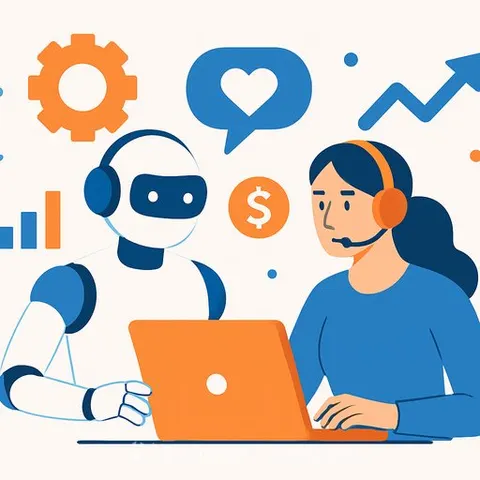
AI-Driven Follow-Up Moves Beyond Personalization
Artificial intelligence is rewriting how companies approach customer follow-up across sales, marketing, and customer service. What began as automated responses has evolved into something more sophisticated-and the shift is accelerating.
The first wave of AI for Marketing replaced generic, templated messages with personalized interactions. Chatbots moved beyond offering a fixed set of answers. AI systems could now identify individual customers, understand their history, and reach out at the right moment with relevant messages.
That phase solved a real problem. Sales teams, marketers, and customer service representatives no longer had to manually craft follow-ups for each customer. Automation handled the timing and basic personalization.
But companies are now moving to a second phase. Early AI follow-up, despite its improvements, still feels generic by today's standards.
What's Changing Now
The new generation of industry-trained AI goes deeper. Rather than applying broad patterns across customers, these systems analyze specific behaviors, needs, and interaction histories to inform follow-up strategy. The difference is subtle but meaningful for marketing teams managing large customer bases.
This shift reflects how AI training has become more specialized. Systems trained on actual sales, marketing, and customer service workflows understand the nuances of these functions in ways general-purpose AI cannot.
For marketing professionals, the practical implication is straightforward: follow-up automation is becoming more effective at scale. The systems require less manual intervention and adjustment to deliver relevant messages to individual customers.
Learn more about how AI for Customer Support is changing how teams interact with customers across channels.