
AI news ·
Job applicants seek class status in Workday AI bias lawsuit
Rejected job applicants asked a California federal court to certify a class action against Workday, alleging its AI screening tools discriminated by age, sex, disability, and race. The motion argues thousands of workers were affected and individual cases are too costly to litigate.
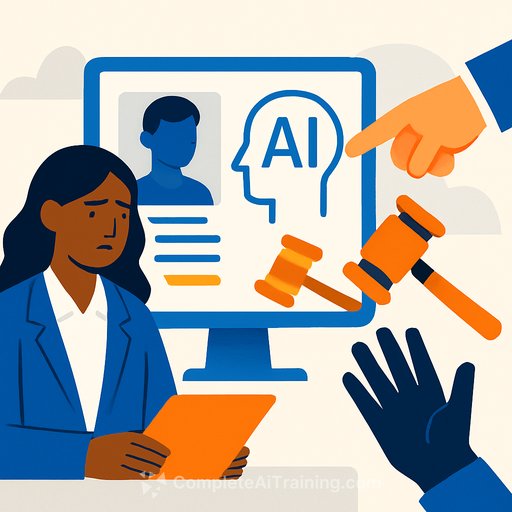
A group of rejected job applicants filed a motion Monday asking a California federal court to certify their lawsuit against Workday as a class action. The plaintiffs argue that artificial intelligence screening tools used by the company systematically discriminated against candidates based on age, sex, disability, and race, and that the cost and technical complexity of litigating individually would make separate cases impossible.
The push for class certification
The motion contends that thousands of workers may have been affected by the same allegedly biased algorithms. Because proving AI discrimination requires extensive discovery into proprietary software, data models, and engineering decisions, the plaintiffs say individual claimants lack the resources to mount effective challenges on their own. A class action would pool those resources and allow a unified examination of how Workday's tools operate across different hiring contexts.
Workday has not yet responded to the motion. The company previously denied the allegations and has maintained that its AI products are designed to comply with applicable employment laws.
Legal questions around algorithmic hiring
The case sits at the intersection of employment discrimination law and the growing use of automated decision-making tools in hiring. Federal and state laws bar employers from using selection criteria that disproportionately screen out protected groups, unless those criteria are job-related and consistent with business necessity. Applying that framework to machine learning models - which can generate patterns that developers did not explicitly program - remains an unsettled area of law.
Regulators have signaled increased scrutiny of AI hiring tools. The Equal Employment Opportunity Commission has issued guidance clarifying that employers can be held liable for discriminatory outcomes produced by third-party software, and several states have introduced bills requiring audits of automated employment decision systems.
What the plaintiffs must prove
To secure class status, the applicants must show that their claims share common questions of law or fact, that the proposed class is sufficiently numerous, and that the named plaintiffs' experiences are typical of the broader group. The central factual dispute will likely turn on whether the same algorithmic mechanisms affected all rejected candidates in a similar way, or whether hiring decisions varied too widely across job postings, time periods, and model versions to warrant collective treatment.
The plaintiffs are seeking to represent a nationwide class of applicants who were rejected after being evaluated by Workday's AI screening tools during a defined period. If certified, the class could encompass a large pool of workers across industries that use Workday's hiring platform.
Why this matters for legal professionals
This case will test how decades-old civil rights frameworks apply to algorithmic hiring systems. For employment lawyers and in-house counsel, the outcome could shape liability exposure for companies that rely on third-party AI tools to screen candidates. A class certification ruling in the plaintiffs' favor would signal that courts are willing to treat AI bias claims as systemic rather than episodic - a shift that would affect litigation strategy, settlement calculus, and compliance planning across the HR technology sector.