
AI news ·
Journalists sue Apple, Amazon, and seven other tech firms over AI voice use without consent
Illinois voice professionals sued Apple, Amazon, Meta, Nvidia, Microsoft, Samsung, Alphabet, Adobe, and ElevenLabs for using their voices to train AI without consent. The BIPA cases seek up to $5,000 per intentional violation, with defendants filing motions to dismiss.
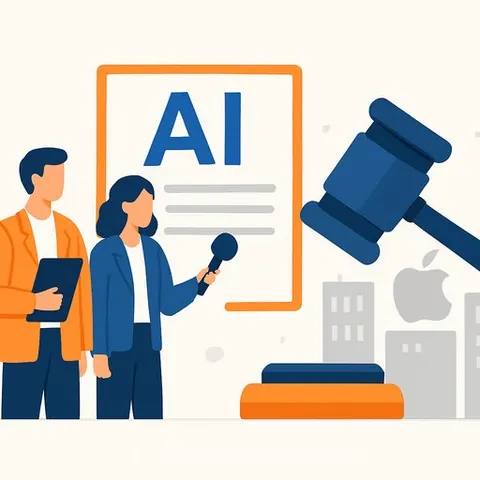
A group of journalists, podcasters, voice actors, and audiobook narrators from Illinois filed lawsuits against nine major technology companies, accusing them of using their voices to train AI systems without permission. The cases, filed in the U.S. District Court for the Northern District of Illinois, name Apple, Amazon, Meta, Nvidia, Microsoft, Samsung, Alphabet, Adobe, and ElevenLabs as defendants.
The lawsuits center on the Illinois Biometric Information Privacy Act (BIPA), which requires companies to notify individuals, obtain consent, and follow strict data retention rules before collecting biometric identifiers such as voiceprints. The plaintiffs say none of the companies complied with those requirements. They claim recordings of their voices - used professionally for podcasts, audiobooks, and journalism - were collected and used to train AI voice models without notification or signed consent forms.
What the lawsuits allege
Beyond BIPA, the complaints reference state laws covering the right of publicity and consumer protection rules against fraud. BIPA allows for statutory damages of up to $1,000 per negligent violation and up to $5,000 per intentional violation, calculated per affected individual and per provision of the law.
The plaintiffs argue that the systematic collection of voice data itself constitutes the harm BIPA was designed to prevent. In their view, it doesn't matter whether a cloned voice later appeared in a commercial product that the owner could identify.
How the companies are responding
As of late August 2026, the defendants have filed motions to dismiss the lawsuits. They argue that the plaintiffs have not provided specific evidence of actual harm. The plaintiffs dispute this, maintaining that the unauthorized collection of voice data is the violation, regardless of downstream use.
The case raises questions about how AI voice training data is sourced and whether existing biometric privacy laws apply to voice cloning. For writers and voice professionals, the outcome could shape how tech companies handle voice recordings used in AI training - and whether consent requirements extend to work produced for podcasts, audiobooks, and broadcast.
Professionals who record their voices for a living may want to review how their work is licensed and whether their contracts address AI training use. AI Voice Generation Certifications and related training can help clarify how voice data is processed in commercial AI systems. The Illinois case is one to watch: if the plaintiffs succeed, it could set a precedent for how voice-based biometric data is handled nationwide.
Why this matters for writers
Writers who narrate their own audiobooks, host podcasts, or appear in video content are directly exposed to the practices at issue in this lawsuit. The case tests whether a person's voice - a core part of their professional identity - can be used to train AI models without explicit permission. If the court rules against the companies, it could force clearer consent processes across the industry. If the motions to dismiss succeed, voice professionals may need to push for contractual language that explicitly addresses AI training rights.
For those working in voice-adjacent fields, understanding the legal landscape around voice data is becoming part of the job. AI Voice Modulation Courses cover how voice synthesis technology works, which is useful context for anyone assessing how their recordings might be used. The practical takeaway: review your existing contracts, ask how your recordings are stored and processed, and document any permissions you grant for AI training.