
AI news ·
Kenyans built a living writing essays for college students, then AI arrives and the work dries up
A Kenyan essay writer saw his 2,500-assignment career collapse after ChatGPT's 2022 release, as students switched from paying freelancers to free AI-generated papers.
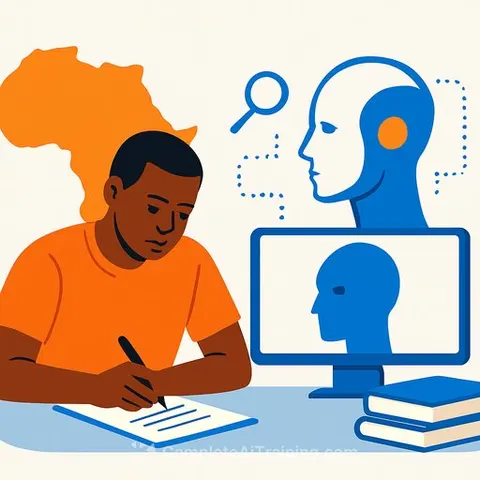
Teresios Bundi wrote more than 2,500 college essays over 12 years from a cramped apartment in Nairobi, earning a living by completing assignments for students thousands of miles away. The work dried up almost overnight in late 2022 when OpenAI released ChatGPT, and students made a simple calculation: why pay a Kenyan freelancer when an A.I. chatbot could do the job for free?
Mr. Bundi, now 34, moved from a farming village to Nairobi in 2011 to become the first in his family to attend university. A friend suggested he try writing essays for overseas students. His first assignment - a two-page paper on the health benefits of Garcinia cambogia, a fruit he had never heard of - paid $7 for three hours of work.
"That was a lifeline for me, I needed the money," Mr. Bundi said. "I could not sleep that night. I was ready to burn the midnight oil."
The hidden essay economy
Mr. Bundi's story reflects a broader era of internet gig work that connected well-educated workers in Kenya, the Philippines, and India with students at Western universities. Some clients handed over their school login credentials so Mr. Bundi could track assignments directly. He balanced completing his own public health degree while writing papers on engineering, medicine, and computer science for students he never met.
The work was unglamorous but reliable. It filled a demand that traditional economies could not satisfy: cheap, educated labor available on short notice. Thousands of Kenyans built livelihoods around this academic ghostwriting trade.
ChatGPT changes the equation
The release of ChatGPT in 2022 rewired the economics of cheating. Students who once paid freelancers realized they could generate essays instantly without sharing passwords or waiting for a human writer. The demand that sustained Mr. Bundi's work collapsed.
Mr. Bundi saw his orders vanish. The boom era of internet gig work that had been a global lifeline showed its fragility. A single tool, freely available, undercut an entire segment of online labor almost immediately.
Why this matters for writers
The collapse of the essay-writing market in Kenya is not an isolated event. It mirrors what happens when A.I. tools can replicate the output of skilled writers at zero marginal cost. For professional writers, the lesson is not about academic dishonesty - it is about the speed at which A.I. can commoditize writing tasks that clients view as interchangeable.
Writers who build careers around volume-based, transactional work face the same vulnerability Mr. Bundi encountered. The protection lies in work that requires judgment, original reporting, specialized domain knowledge, or a distinct voice - elements that generic A.I. output cannot reliably replace. Resources like AI for Writers offer guidance on integrating these tools without being replaced by them.