
AI news ·
Legal experts warn AI tools carry serious risks when used without an attorney
AI-generated legal documents frequently contain errors and fabricated citations that can sink your case or trigger court sanctions. Your conversations with AI also lack attorney-client privilege, leaving sensitive details unprotected.
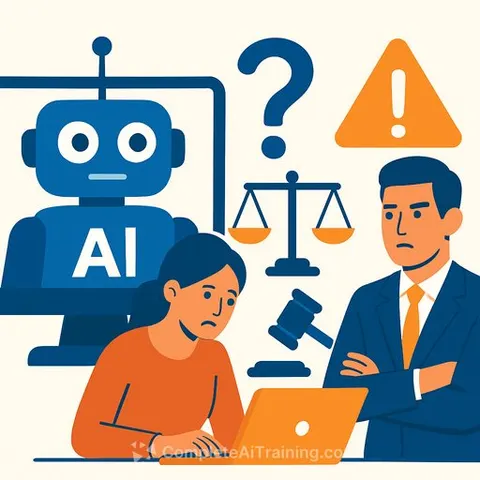
AI Legal Tools Carry Real Risks for Your Cases
More people are using artificial intelligence to handle legal work themselves-drafting divorce papers, fighting traffic tickets, writing contracts, and preparing court filings. But legal experts warn that relying on AI instead of a licensed attorney can backfire.
AI-generated legal documents often contain errors that can damage your case or create costly consequences. Family, immigration, and bankruptcy attorney Giovanna Gallo says people underestimate how inaccurate these tools can be.
"When you rely on AI and represent yourself, things may not come out correctly," Gallo said. "You may think you have the right defense, but in court it could turn out to be exactly the opposite."
Mistakes Have Real Consequences
The legal profession has already seen problems. Attorneys across the country have faced sanctions and reprimands after submitting AI-generated court briefs containing false information and fabricated legal citations.
Documents produced entirely by AI may not hold up in court or could become unenforceable. If you insist AI is correct when opposing counsel argues otherwise, a judge can impose sanctions against you.
"An order from the judge is an order," Gallo said. "It's not something you can simply ignore. There can be serious consequences."
Privacy Problems
Information you share with AI tools is not protected by attorney-client privilege. Personal details, legal strategies, and sensitive admissions entered into a chatbot could potentially be exposed or used against you later.
Conversations with a licensed attorney carry legal protections. Conversations with AI do not.
Where AI Can Help
AI works best as a research or organizational tool, not as a replacement for legal representation. Some AI programs are designed specifically to assist attorneys by helping them review documents and identify errors.
But legal professionals say the technology cannot yet fully replace experienced lawyers, particularly in high-stakes situations involving immigration, divorce, criminal charges, or bankruptcy.
Better Alternatives to Consider
If legal costs concern you, look into free or low-cost legal aid organizations rather than relying entirely on AI-generated advice. These services provide actual legal review from qualified professionals.
Gallo does not recommend using AI-generated legal documents without review from a qualified attorney. The convenience of free, instant tools is not worth the risk.
For more on how AI fits into legal work, see our guide to AI for Legal professionals, or explore training resources like the AI Learning Path for Paralegals.