
AI news ·
Lenders stay liable when AI underwriting errs, experts say
54% of private credit managers plan to use AI in underwriting, but lenders remain liable for its mistakes. A Canadian court ruling ordered Air Canada to pay CA$812 after its chatbot gave wrong fare advice, setting a precedent that firms can't blame the technology.
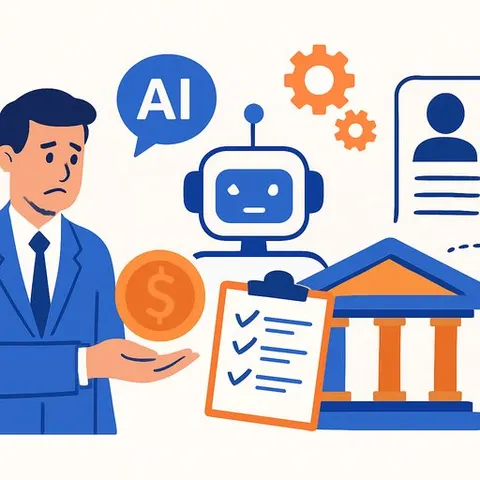
More than half of private credit portfolio managers - 54% - plan to deploy AI in underwriting, according to a March PwC survey of 120 global firms. But as lenders lean on algorithms to score borrowers and monitor portfolios, a hard question is emerging: when the technology gets it wrong, who pays?
For credit risk expert Naeem Siddiqi, author of Intelligent Credit Scoring and senior risk advisor at SAS, the answer is straightforward. If a large language model miscalculates a number or uses a prohibited category like race or religion, "then the lender is liable," he said.
The courts have already tested that principle. In Moffatt v. Air Canada, a customer used the airline's chatbot in 2022 to ask about bereavement fares after a family death. The chatbot advised him to book a full-fare ticket and apply for a refund within 90 days - advice that contradicted Air Canada's actual policy requiring requests before travel. When the customer tried to collect, the airline argued it shouldn't be held liable, treating the chatbot as a separate entity. The British Columbia Civil Resolution Tribunal rejected that defense and ordered Air Canada to pay CA$812.02, including damages, interest, and fees.
Siddiqi said the ruling set a precedent: "Companies can't argue that the AI is a separate independent entity that frees the firm from liability."
Risk sits with the lender
For private credit firms racing to deploy AI across underwriting and portfolio monitoring, the early case law sends a signal: the technology can do the work, but it doesn't absorb the risk. That still sits with the lender.
"Legally and regulatory-wise, the buck stops entirely with the lender," said Omar Abassi, founder of Newport Beach-based lending tech startup LoanFlo AI.
Regulators including the Consumer Financial Protection Bureau, the Office of the Comptroller of the Currency, and the U.S. Department of Housing and Urban Development have made it clear that compliance obligations can't be delegated to a software vendor, Abassi said. If an AI algorithm introduces bias, violates the Equal Credit Opportunity Act, or fails to provide legally compliant adverse action notices, regulators sue or fine the lender - not the AI company.
Because of that exposure, some lenders require vendor platforms to provide audit trails showing exactly what the AI read, plus regular back-testing to prove the model doesn't inadvertently produce discriminatory outcomes. Finance leaders overseeing these systems may want to review AI for Finance training to understand where the risks concentrate in practice.
Treat AI like an employee
The gap between market enthusiasm and operational risk is top-of-mind for technology leaders building loan administration tools.
"There's a general enthusiasm in the market around AI … and firms are very excited about diverse capabilities," said David Yahalomi, chief operating officer and co-founder of Tel Aviv-based loan-management platform Hypercore. "But this technology is a statistical-based technology … it can make mistakes, and we've all seen that."
Rather than viewing AI as a replacement for decision-makers, Yahalomi suggested lenders treat AI like a new hire who requires guidance and thorough review. "We should treat it like it's an employee," he said. "Even if you feel like you've trained your best agent … think about it like you gave a deal to your best person five minutes ago. Would it give you the correct answers, or does it need proper time to actually go and research?"
He cautioned against granting AI final authority over deals: "We should not treat it as a person that makes calls … you shouldn't treat it as an executive."
Underwriters are feeling the pressure most. "Underwriters are definitely taking on too much work in traditional setups and being overworked in many cases, which leaves more room for human error," Abassi said. But AI isn't expected to replace credit risk assessment; instead, it's closing the gap so fewer underwriters can handle more loans with less stress.
"Eventually, the AI will be so good that human underwriters won't be able to keep up," he added. "AI agents will be the ones reviewing the other AI's work. We aren't there yet, but ultimately it's on its way."
Why this matters for finance professionals
For CFOs and finance leaders, the legal precedent is clear: AI adoption doesn't shift liability to the technology vendor. The lender remains accountable for discriminatory decisions, regulatory violations, and compliance failures - whether a human or an algorithm made the call. That means audit trails, back-testing, and human review aren't optional extras; they're the cost of doing business with AI. Teams that build those controls into their workflows now will be better positioned than firms that treat AI as a hands-off solution. AI Learning Path for CFOs offers a structured way to assess those operational risks before they become legal ones.