
AI news ·
Malaysia begins beta testing agentic AI in MyGOV public service app
Malaysia is beta testing agentic AI in its MyGOV app, letting citizens use plain language to find and complete government services. The platform serves 2.9 million users across 52 services, with the AI able to execute transactions like paying police summonses across agency systems.
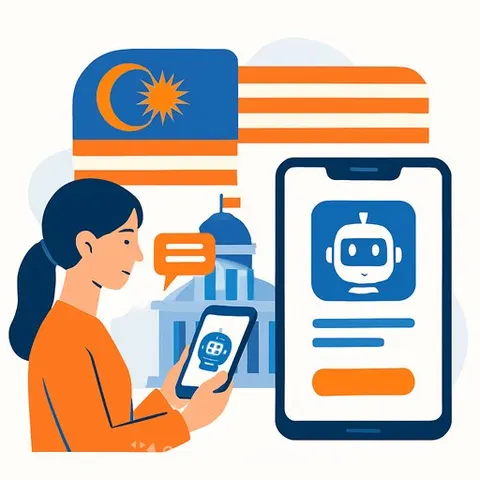
Malaysia has begun beta testing agentic AI in its MyGOV application, allowing citizens to find and complete government services using plain language instead of navigating individual agency websites. The trial, which started in early August 2026, tests whether AI can understand requests, identify the responsible agency, and guide users through transactions - potentially executing actions across connected public-sector systems with user permission.
How the agentic AI system differs
Unlike a conventional chatbot that responds to individual prompts, the planned system is intended to understand a request, identify the responsible government service, and guide the user through required steps. When a function is available and the user has granted permission, the AI could also perform actions through connected government systems. The ministry cited checking and paying police summonses as an example of a complete AI-assisted transaction.
Citizens would no longer need to know which agency, website or administrative system handles a particular request before seeking assistance, said the Ministry of Digital. The beta deployment began in early August and will be introduced gradually, though the ministry has not disclosed how many users can currently access the feature or which transactions are available during testing.
Policy safeguards and missing technical details
The government says deployment will follow Malaysia's Public Sector AI Adoption Guidelines and include safeguards covering data privacy, security, information accuracy, transparency, AI governance, and human oversight. However, the ministry has not provided technical details about how the system will obtain consent, access data across agencies, verify AI-generated guidance, or allow users to challenge incorrect actions.
MyGOV has more than 2.9 million users and offers 52 services from 19 government agencies as of July 2026. The platform currently serves as a single access point for digital government services. The agentic AI initiative aims to help users navigate and complete transactions across connected systems.
The project supports Malaysia's wider ambition to become an AI Nation by 2030.
Why this matters for government professionals
For public-sector officials evaluating similar technology, Malaysia's trial offers a real-world test of whether AI agents can operate across departmental boundaries on behalf of citizens. The key challenges ahead involve clear consent mechanisms, reliable government data, audit trails, and effective routes for correcting automated errors - governance requirements that apply to any agency planning to deploy agentic AI for public services. For officials considering their options, AI for government training resources cover these practical implementation concerns. A dedicated AI learning path for policy makers addresses the oversight and governance dimensions that arise when AI starts executing actions on behalf of citizens.